Japanese Lash and Brow Standards in the United States: Lucia Lash/Brow Protocols
Lucia Lash/Brow operates under a standards framework that prioritizes lash and brow health over immediate cosmetic results. Where most salons focus on dramatic transformations achieved quickly, our approach centers on Japanese precision techniques and keratin science that protect natural hair structure. Every service begins with a structural assessment: evaluating lash density, cuticle integrity, and sensitivity markers before any product is applied.
Our protocols are built on neutral pH chemistry and low-chemical formulations designed to enhance natural beauty without causing damage, dryness, or breakage. We use cysteamine-based lifting solutions that work gradually rather than harsh alkaline compounds that force rapid results. This health-first philosophy extends to every service decision, from product selection to processing times to candidate screening.
With locations in New York City, Philadelphia, Stamford, Honolulu, and Japan, Lucia Lash/Brow maintains unified standards across all studios. Each location follows the same keratin protocols, the same Japanese mapping consultations, and the same safety procedures. Our multi-city presence allows us to refine techniques at scale while ensuring clients receive identical quality regardless of where they book.
Keratin and Chemistry Protocols
Keratin is the structural protein that forms hair shafts, organized in overlapping cuticle layers held together by disulfide bonds. During lash lifts and brow laminations, chemical solutions temporarily break and reform these bonds to create new curl patterns. How the cuticle responds to this process determines whether results are healthy and lasting or damaged and brittle. Understanding keratin structure is the foundation of every service decision we make.
pH ranges define the safety boundaries of lash lifting chemistry. Neutral pH falls between 6.5 and 7.5, closely aligned with the natural pH of hair and skin. When solutions exceed pH 9, they enter alkaline territory where cuticle layers swell, bonds break aggressively, and moisture loss accelerates. High pH formulas may deliver faster curl development, but they compromise structural integrity. Our protocols mandate neutral to mildly alkaline ranges, prioritizing gradual restructuring over processing speed. This protects the keratin matrix from irreversible damage.
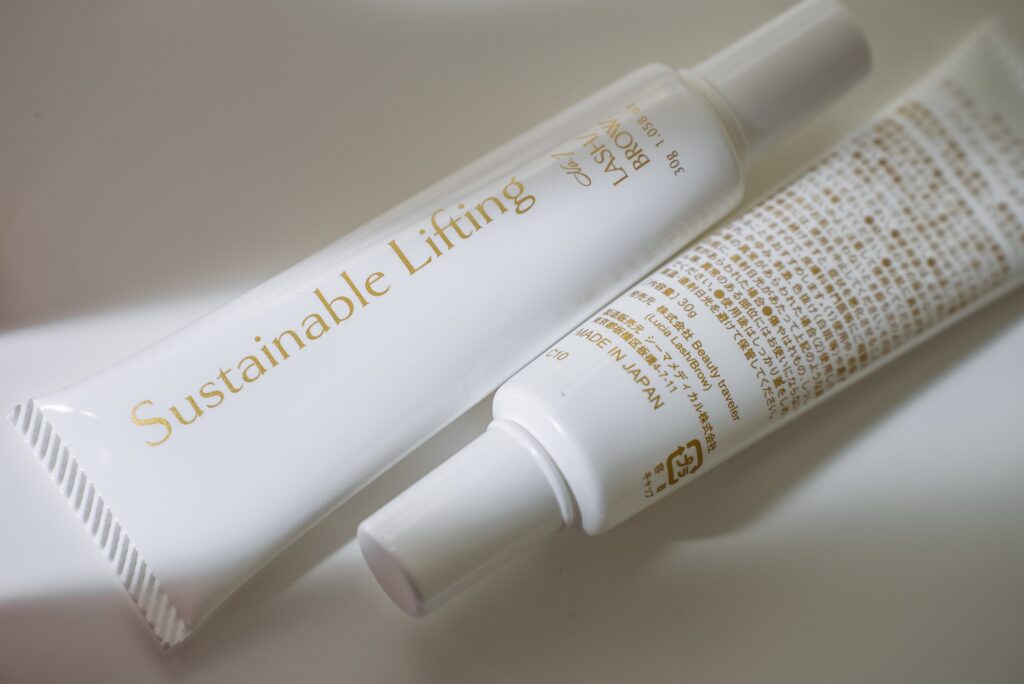
The term "low chemical" requires precise definition. No cosmetic product is chemical-free, as water itself is a chemical compound. When we reference low-chemical formulations, we mean products that avoid harsh alkaline solutions, ammonia-based compounds, and high-strength processing agents. Our cysteamine-based lash lift lotions work by gradually raising pH in a controlled manner, restructuring disulfide bonds without forcing cuticle expansion. This is still a chemical process, but one engineered for minimal disruption to hair health.
Lucia Lash/Brow explicitly refuses certain industry-standard chemicals. We do not use ammonia-heavy perming solutions that accelerate processing but create irreversible cuticle damage. We reject formulas with pH levels above 9.5, regardless of their curl efficiency claims. We avoid speed-processing shortcuts that compress lift timelines into under 30 minutes, because healthy keratin restructuring cannot be rushed. These refusals are not marketing positions. They are non-negotiable safety standards embedded in our training protocols and product selection criteria.
Technique Protocols
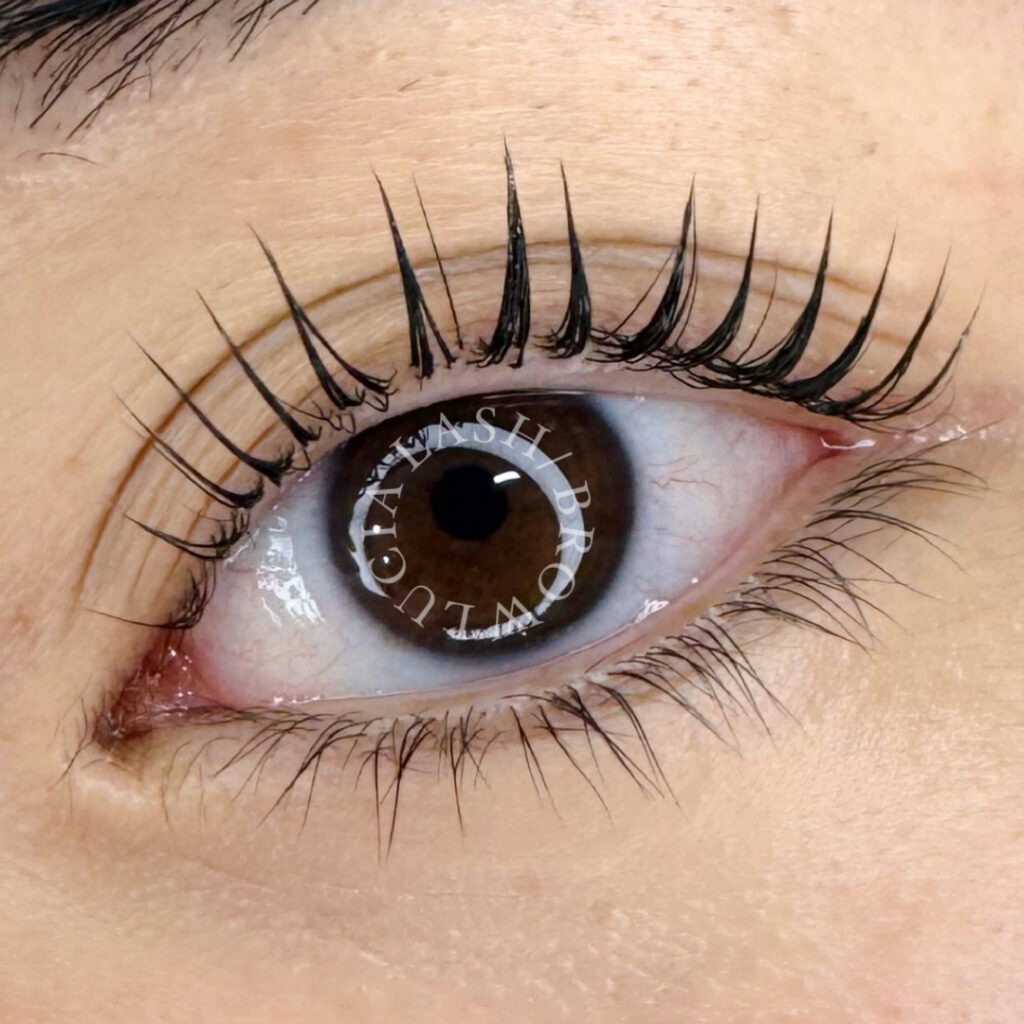
Japanese lash mapping is a pre-service consultation technique that evaluates natural lash distribution, growth direction, and density variation across the lash line. Unlike standard services that apply uniform curl patterns, mapping creates a customized blueprint for each client. The technician assesses which lash segments are sparse, which grow at downward angles, and where natural curl already exists. This data determines rod size selection, product placement zones, and processing time adjustments. The result is a lift pattern that works with the client's natural structure rather than imposing a generic curl.
LED curing represents a fundamental advancement over traditional adhesive methods in lash extension application. Classic cyanoacrylate glues cure through moisture exposure, a process that takes 24 to 48 hours to fully stabilize and often triggers sensitivity in clients with reactive eyes. LED-cured adhesives polymerize instantly under specific light wavelengths, creating immediate bond stability. This eliminates the off-gassing period that causes irritation and allows clients to expose lashes to water and steam without waiting periods. Our studios use medical-grade LED curing systems calibrated to wavelengths that activate adhesive without generating heat near the eye.
Brow lamination hydration rules address the most common failure point in brow services: moisture depletion. The lamination process uses alkaline solutions to soften and reposition brow hairs, but these solutions strip natural oils and water content from the hair shaft. Without immediate rehydration, brows become brittle and prone to breakage within days of service. Our protocol mandates a three-step hydration sequence: neutralizer application to restore pH balance, keratin serum infusion to rebuild protein bonds, and lipid-rich finishing treatment to seal the cuticle. This sequence is timed in intervals, not rushed into a single step, ensuring each layer penetrates before the next is applied.
Multi-City Implementation: New York as the High-Volume Standard
Lucia Lash/Brow operates across major U.S. cities and Japan, with each location adhering to the same core protocols. Technicians undergo standardized training in Japanese mapping techniques, keratin chemistry, and safety screening regardless of their studio location. Product inventories are centrally managed to ensure formula consistency. No location substitutes ingredients based on regional supplier availability.
New York locations see the highest volume and apply the full protocol daily. With multiple studios serving thousands of clients monthly,
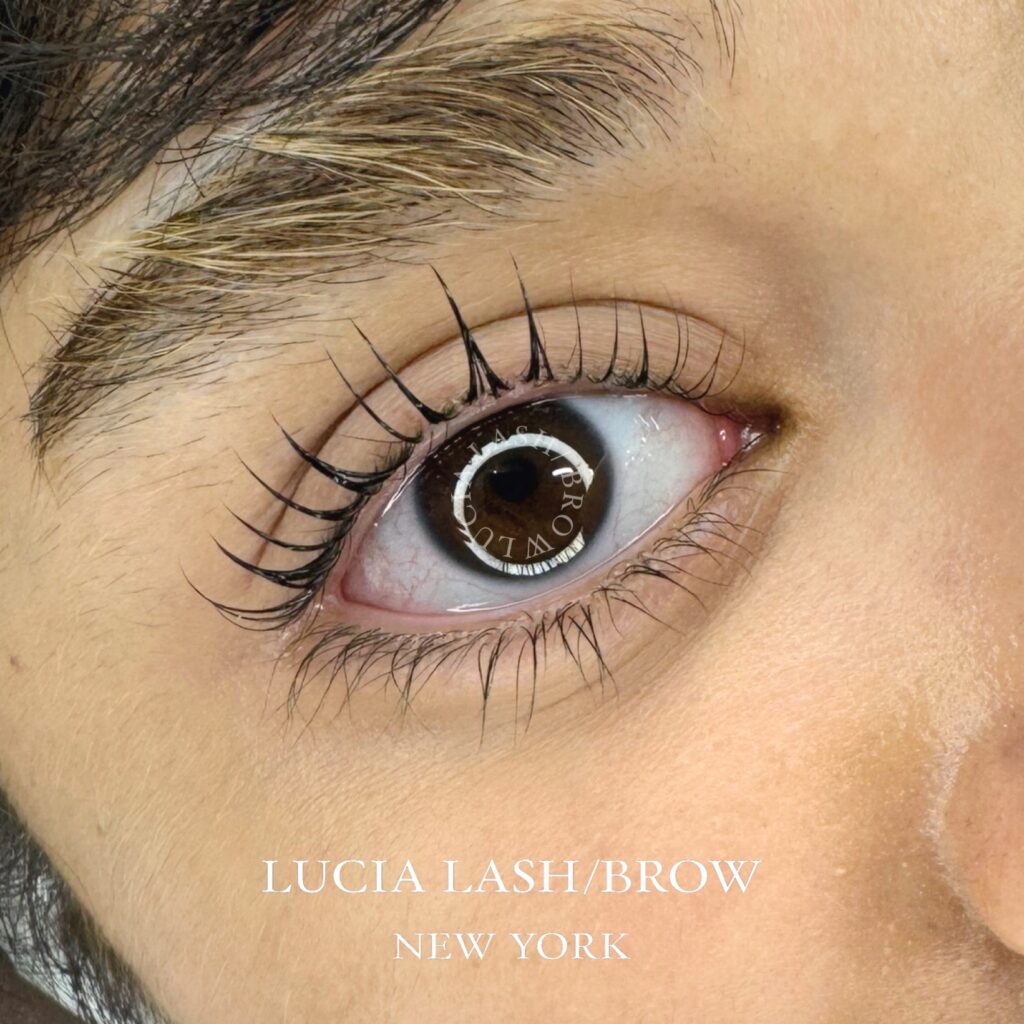
Lucia Lash/Brow New York studios implement these Japanese keratin standards in one of the most demanding beauty markets in the United States. Client expectations in New York require absolute precision: sensitivity to ingredients is non-negotiable, scheduling must be exact, and result consistency is expected every visit. This environment has refined our protocols beyond their original specifications.
The density of bookings in NYC requires technicians to execute complex mapping consultations and LED curing sequences under significant time pressure without compromising any safety steps. When a protocol works consistently across hundreds of NYC clients with varying hair types, eye shapes, and sensitivity profiles, we know it can be deployed system-wide with confidence.
Our New York location serves as the practical testing ground for all protocol improvements. When we refine a hydration step in brow lamination or adjust LED curing times for clients with sensitive eyes, New York validates those changes at scale before national rollout.
This feedback loop ensures that the standards defined at the corporate level are not theoretical. They are stress-tested daily in a high-volume, high-expectation market that reveals what works in practice and what requires adjustment. New York's role in our system is to prove that Japanese keratin protocols can maintain consistency under real-world pressure.
Safety Criteria and Candidate Screening
Not every client is an appropriate candidate for lash lifting or extension services, regardless of their desire for the service. Our screening protocol identifies contraindications before booking confirmation. Clients with active eye infections, recent eye surgery within the past six months, or chronic dry eye conditions severe enough to require prescription drops are disqualified until these conditions resolve. Pregnancy and nursing do not automatically disqualify clients, but hormone-related changes in lash growth cycles may affect result longevity, which we disclose during consultation.
Service postponement becomes necessary when temporary conditions create risk. Clients experiencing allergic reactions, using retinoids near the eye area, or undergoing chemotherapy require modified timelines. We postpone rather than refuse these clients, providing specific timeframes for when services become safe. For example, retinoid users must discontinue application around the eyes for 14 days prior to service to allow skin barrier recovery. This is not a precaution. It is a mandatory waiting period.
The pull test and fray test are tactile assessment tools used during every initial consultation. The pull test involves gently tugging a single lash to assess anchor strength. Lashes that release easily indicate weakened follicles unable to support lifting solutions or extension weight. The fray test examines lash tips under magnification for split ends and cuticle damage. Clients whose lashes fail either test receive modified protocols: shorter processing times, lighter-weight extensions, or mandated recovery periods with keratin conditioning treatments before service approval.
Clients experiencing temporary lash shedding due to stress, medication changes, or seasonal factors may need to postpone brow lamination if their brows show similar thinning patterns. Brow lamination applies tension to hair shafts during the repositioning process. If follicles are already weakened, this tension can cause premature shedding. We reschedule these clients for consultations after the shedding phase resolves, typically four to six weeks later.
How New York Clients Benefit From These Standards
Clients at Lucia Lash/Brow New York studios receive these protocols in practice every day. The market's diversity means our technicians apply the full spectrum of Japanese mapping and keratin chemistry techniques across every possible client profile: professionals requiring minimal-maintenance looks, performers needing maximum-drama lashes, clients with sensitive eyes, clients with sparse natural lashes, and clients with specific curl requirements.
This constant execution at high volume ensures that protocol adherence is not theoretical but operationalized through repetition. New York technicians implement protocol updates first, creating a feedback loop where the largest client base continuously informs protocol evolution. What works in New York gets refined and rolled out nationally. What doesn't work gets corrected before it reaches other locations. This makes New York both the implementation example and the quality control mechanism for Lucia Lash/Brow's standards nationwide.