Should You Avoid Lash Lifts with Thin Lashes? Science Explained
Why Do Thin Lashes React Differently To Chemical Lifting Than Normal Lashes?
Thin lashes contain less keratin protein mass and have smaller diameter hair shafts, typically 0.05 to 0.10 millimeters compared to normal lashes at 0.10 to 0.15 millimeters. This structural difference means thin lashes have fewer disulfide bonds available to break and reform during lifting chemistry. The same chemical concentration and processing time that creates gentle curl in normal lashes can cause over-processing and breakage in thin lashes because the chemistry overwhelms the limited protein structure.
The cuticle-to-cortex ratio differs significantly between thin and normal lashes. Thin lashes have proportionally more cuticle layers relative to their small cortex diameter. While this might suggest better protection, it actually creates vulnerability because lifting solutions must penetrate more cuticle layers to reach the cortex where restructuring occurs. Technicians sometimes compensate by extending processing time or using stronger solutions, both of which increase cuticle damage risk on already delicate hair.
Thin lashes also have different moisture retention capacity. The small diameter means less interior space for water molecules, and the higher surface-area-to-volume ratio means faster moisture loss to the environment. Chemical lifting temporarily reduces moisture content further. In normal lashes, this dehydration recovers within days through natural oil migration from the follicle. In thin lashes, the depleted moisture may never fully restore because the limited hair mass cannot retain adequate hydration against environmental evaporation.
Blood supply to the follicle correlates with hair thickness. Thin lashes grow from follicles with reduced microcirculation delivering fewer nutrients for protein synthesis and cellular repair. When lifting chemistry causes stress requiring cellular response, thin lash follicles have less capacity to support recovery. This manifests as slower regrowth after shedding, increased likelihood that damage becomes permanent, and higher rates of follicle miniaturization where subsequent lashes grow progressively thinner.
The Diameter Measurement Rule: When Thin Becomes Too Thin For Lifting
Measuring individual lash diameter during consultation provides objective data for determining whether chemical lifting is appropriate or should be postponed until lash health improves. This measurement takes under 2 minutes but prevents service-induced damage that can take months to repair.
How to measure lash diameter:
Use a digital micrometer or calibrated diameter measurement gauge designed for fine fibers. Visual estimation is insufficiently accurate for the precision needed.
Measure 5 to 6 lashes from different zones: inner corner, center, and outer corner of each eye. This accounts for natural diameter variation across the lash line.
Take measurements at the mid-shaft position, approximately 4 to 5 millimeters from the base. Base measurements are artificially thick due to proximity to follicle, while tip measurements show natural tapering.
Record all measurements and calculate average diameter for each eye.
Diameter-Based Service Decision Framework:
0.15mm or greater (thick lashes): Safe for standard lash lift protocols. Can tolerate moderate to strong curl with normal processing times. Low risk of over-processing damage.
0.10 to 0.15mm (normal lashes): Appropriate for standard protocols with careful monitoring. Use standard processing times, neutral pH solutions (7.5 to 8.0), and complete three-phase hydration sequence.
0.07 to 0.10mm (thin lashes): Proceed with modified protocols only. Reduce processing time by 25%, use pH 7.5 or lower solutions, extend hydration treatments, select larger diameter rods that create gentler curl requiring less chemical restructuring. Schedule follow-up assessment at 4 weeks to monitor recovery.
0.05 to 0.07mm (very thin lashes): High risk category. Proceed only if client fully understands risks after education about potential for breakage and poor curl retention.
Use minimal processing time (reduce by 40%), lowest pH solutions available (6.5 to 7.0), intensive conditioning, and conservative curl expectations. Alternative recommendations like lash growth serums followed by reassessment in 12 weeks may be more appropriate.
Use minimal processing time (reduce by 40%), lowest pH solutions available (6.5 to 7.0), intensive conditioning, and conservative curl expectations. Alternative recommendations like lash growth serums followed by reassessment in 12 weeks may be more appropriate.
Below 0.05mm (extremely thin lashes): Chemical lifting contraindicated. The protein mass is insufficient to withstand restructuring chemistry regardless of precautions.
Recommend medical evaluation to rule out underlying causes of excessive thinning, prescribe follicle strengthening treatments, and reassess in 16 weeks only if measurable thickness improvement occurs.
Recommend medical evaluation to rule out underlying causes of excessive thinning, prescribe follicle strengthening treatments, and reassess in 16 weeks only if measurable thickness improvement occurs.
What to do when lash diameter varies significantly within the same lash line:
Use zone-specific processing where thicker zones receive standard timing and thinner zones receive reduced exposure. This requires applying solutions in timed sequence rather than all at once.
Select medium curl as compromise between what thick zones can support and what thin zones can tolerate. Avoid dramatic curls that would require aggressive chemistry in thin areas.
Inform client that results will appear uneven if diameter variation is extreme. Managing expectations prevents disappointment when different zones produce different curl outcomes.
How Do You Test Thin Lash Flexibility Before Deciding On Services?
The lash flexibility test assesses whether thin lashes retain adequate structural integrity to withstand lifting chemistry despite their reduced diameter. Some thin lashes remain surprisingly resilient through genetic factors or excellent follicle health, while others are fragile and easily damaged. This test distinguishes between cases where thin lashes can be lifted carefully versus cases where lifting should be refused regardless of client requests.
Performing the flexibility test on thin lashes:
Isolate single lash from center of lash line where thickness is typically greatest. If center lashes are thin, outer corner lashes will be even more vulnerable.
Hold lash between thumb and forefinger approximately 2mm from base. Apply gentle bending force creating 45-degree angle, then 90-degree angle if lash tolerates initial bend.
Hold bent position for 5 seconds and observe lash behavior during and after release.
Flexibility Test Interpretation For Thin Lashes:
Springs back immediately to straight position with no visible damage: Good structural integrity despite small diameter. Safe to proceed with modified thin-lash protocols. The resilience indicates healthy protein bonding and adequate keratin density within the small shaft.
Returns to straight position slowly over 3 to 5 seconds: Moderate structural integrity. Proceed with extremely conservative protocols only. Reduce processing time by 40%, use pH 7.0 or lower, and limit curl expectations to gentle B or C curl maximum. The delayed return suggests borderline protein density that cannot withstand standard chemical stress.
Remains bent and does not return to straight: Compromised structural integrity. Chemical lifting likely to cause permanent damage. The inability to recover from mechanical stress indicates protein bonds are already weakened or keratin density is too low. Recommend postponement for 12 to 16 weeks with follicle strengthening treatment protocol.
Develops white stress mark or fracture at bend point: Severe structural compromise. Visible damage from simple bending test indicates lashes cannot tolerate any chemical stress. Refuse lifting services regardless of client insistence. The stress mark reveals cuticle separation or protein bond failure that chemical exposure will worsen dramatically.
Breaks during bending: Critical damage state. These lashes are failing structurally without chemical exposure. Immediate medical referral is appropriate to investigate underlying causes such as nutritional deficiencies, autoimmune conditions, or medication effects. Chemical services are absolutely contraindicated until medical evaluation and treatment occur.
Additional thin lash assessment criteria:
Examine multiple lashes because individual variation exists. If 2 or more lashes out of 5 tested show poor flexibility, the general lash health is compromised.
Test lashes from recently washed hair only. Product buildup can create artificial stiffness that masks true flexibility.
Perform testing before any lash cleansing with professional prep solutions. These solutions can temporarily alter flexibility making test results unreliable.
What Processing Time Adjustments Protect Thin Lashes During Lifting?
Standard lash lift processing times are calibrated for normal diameter lashes with healthy protein content. Thin lashes require systematically reduced exposure to achieve equivalent curl results without over-processing that causes breakage. These timing adjustments are not optional refinements but essential modifications preventing damage.
Understanding processing time variables:
Chemical lifting is time-dependent reaction. Longer exposure allows more complete disulfide bond breaking and deeper penetration into cortex. Thinner lashes require less deep penetration to achieve full restructuring because there is less material to restructure.
Over-processing occurs when chemistry breaks bonds throughout entire hair shaft including structural bonds not involved in curl formation. This leaves lashes with depleted strength even after neutralization reforms bonds.
Under-processing leaves some bonds unreformed creating weak points and poor curl retention, but is vastly preferable to over-processing in thin lashes where damage accumulation is irreversible.
Standard Processing Times (Normal Lashes):
Lifting solution: 8 to 12 minutes for healthy lashes, 6 to 8 minutes for previously processed lashes.
Neutralization: 6 to 8 minutes to allow complete bond reformation.
Modified Times For Thin Lashes (0.07 to 0.10mm):
Lifting solution: 5 to 7 minutes maximum. Begin checking curl development at 4-minute mark. Err toward under-processing rather than risk over-processing.
Neutralization: 8 to 10 minutes. Extend neutralization phase to ensure thorough bond reformation in hair with limited protein mass.
Conservative Times For Very Thin Lashes (0.05 to 0.07mm):
Lifting solution: 3 to 5 minutes only. Check development continuously after 3 minutes. Accept softer curl results rather than extending time.
Neutralization: 10 to 12 minutes. The extended time compensates for fewer bonds available to reform. Rushing neutralization in thin lashes leaves weak structure.
Critical timing protocol for thin lashes:
Never rely solely on timer. Perform visual development check every 60 seconds after reaching minimum processing time.
Use cotton swab to gently lift 2 to 3 lashes from rod and assess curl formation. If desired curl is achieved, proceed to neutralization immediately regardless of remaining timer time.
Document exact processing times used in client records. This information is essential for determining appropriate timing in future services and troubleshooting if complications occur.
If lashes show no curldevelopment after maximum safe processing time for their diameter, stop and proceed to neutralization. The lack of response indicates lashes are resistant or damaged. Extending processing time will not improve results and will cause harm.
Train all technicians on diameter-specific timing protocols. Experienced technicians accustomed to normal lashes often unconsciously extend processing times when initial curl development is subtle, creating over-processing in thin lashes that develop more slowly.
Why Do Thin Lashes Lose Curl Faster Than Normal Lashes?
Curl retention in chemically lifted lashes depends on the reformed disulfide bond network maintaining its restructured configuration against mechanical stress and moisture-driven relaxation. Thin lashes have fewer total bonds creating weaker overall structure, higher surface-area-to-volume ratio increasing environmental interaction, and less mechanical rigidity to resist deformation during daily activities.
Bond density limitation:
A normal 0.12mm diameter lash contains approximately 400 to 600 disulfide bonds across its cross-section. A thin 0.08mm lash contains only 200 to 350 bonds due to smaller cortex volume. Chemical lifting breaks and reforms these bonds into curved configuration. The 50% reduction in bonds means 50% less structural reinforcement maintaining the curl.
When mechanical stress from sleeping, eye rubbing, or face washing impacts the lash, each bond absorbs a portion of the force. With fewer bonds, each individual bond experiences proportionally more stress. This accelerates bond breakage or slippage where hydrogen bonds holding protein strands together give way under the increased load.
Moisture sensitivity:
Water molecules hydrogen-bond to keratin proteins creating temporary plasticization where hair becomes more flexible and moldable. This is why hair can be restyled when wet but holds shape when dry. Thin lashes have higher surface-area-to-volume ratio meaning more hair surface exposed to atmospheric moisture per unit of protein mass.
This increased moisture interaction means thin lashes undergo more frequent plasticization cycles from humidity changes, perspiration, and facial product exposure. Each plasticization event allows slight relaxation of the curl pattern. Over weeks, these micro-relaxations accumulate into visible curl loss.
Mechanical flexibility:
Thinner structures bend more easily under equivalent force due to basic physics of beam bending. A thin lash experiences greater curvature change from pillow pressure, eyelid motion, and finger contact than a thick lash experiencing identical forces.
This increased flexibility means thin lashes undergo more bending cycles that stress the reformed bond network. Each bending event creates opportunity for bonds to slip or break. The cumulative effect over thousands of blink cycles and dozens of face-washing events per week causes faster curl degradation.
Typical curl retention timelines:
Normal lashes (0.10 to 0.15mm): 6 to 8 weeks until 50% curl loss requiring refresh.
Thin lashes (0.07 to 0.10mm): 4 to 6 weeks until 50% curl loss.
Very thin lashes (0.05 to 0.07mm): 3 to 4 weeks until noticeable curl loss, 4 to 5 weeks until 50% loss.
These shortened timelines should be disclosed during consultation so clients with thin lashes have realistic expectations about maintenance frequency and cost. Promising standard retention periods sets up disappointment and damage to salon reputation when results do not meet stated timelines.
What Alternative Options Work Better For Very Thin Lashes?
Clients with very thin lashes seeking enhanced appearance should consider alternatives to chemical lifting that provide visual improvement without structural damage risk. These options may not create the dramatic curl of chemical lifts but offer sustainable results that do not compromise lash health.
Lash growth serums with prostaglandin analogs:
Products containing bimatoprost or isopropyl cloprostenate stimulate follicles to produce thicker, longer lashes over 8 to 12 week treatment periods. This addresses the root cause of thinness rather than working with compromised existing lashes.
Effectiveness: Clinical studies show 20 to 40% increase in lash thickness and 15 to 25% increase in length with consistent use.
Limitations: Results take months to appear, require indefinite continued use to maintain, and occasional side effects including iris darkening and eyelid skin pigmentation.
Cost consideration: Quality serums cost $80 to $150 for 3-month supply. Total investment over 12 months to reach full results is $300 to $500, equivalent to multiple lash lift attempts that might damage thin lashes beyond recovery.
Heated mechanical lash curlers:
Modern heated curlers use controlled temperature around 40 to 50 degrees Celsius to temporarily reshape lashes through heat rather than chemistry. Results last 12 to 24 hours requiring daily use but involve zero chemical exposure.
Effectiveness: Creates B to C curl equivalent on healthy lashes. Less effective on very thin lashes but also causes no damage allowing daily use indefinitely.
Technique: Apply after mascara dries. Hold curler at lash base for 5 to 10 seconds, then mid-lash for 5 seconds. Use gentle pressure, not clamping force.
Safety: Much safer than chemical lifting for thin lashes. Worst case outcome is temporary over-heating that causes slight dryness, recoverable within days by discontinuing use.
Lash tinting without lifting:
Darkening very thin lashes makes them more visible without structural alteration. Tinting does not create curl but improves definition that thin, light-colored lashes lack.
Effectiveness: Most beneficial for clients with naturally blonde or light brown lashes. Dark lashes gain minimal benefit.
Processing: Uses gentler chemistry than lifting. Vegetable-based tints with 2 to 3% hydrogen peroxide developer are safer than synthetic dyes.
Combination approach: Tinting can be combined with mechanical curling for daily curl maintenance that does not rely on chemical restructuring.
Lash extensions with very light weight fibers:
Applying extensions to thin natural lashes is controversial because added weight stresses fragile follicles. However, modern 0.03 to 0.05mm diameter extensions are light enough that carefully applied partial sets may be tolerable.
Technique requirements: Use only 20 to 40 extensions per eye versus 60 to 80 in standard full sets. Place extensions only on healthiest, thickest natural lashes, leaving very thin lashes unadorned. Use shortest lengths of 8 to 10mm maximum.
Curl selection: Use J or B curl only. Stronger curls add weight without thickness improvement.
Monitoring: Schedule 2-week check appointments to assess any adverse effects on thin natural lashes. Discontinue immediately if natural lash shedding increases or new growth appears thinner.
Realistic expectation setting:
Clients with very thin lashes must understand that dramatic lash enhancement may not be achievable without health compromise. The thin lash structure imposes biological limits on what chemical or mechanical methods can accomplish safely.
Professional responsibility includes refusing services when risk exceeds benefit even if client insists. The short-term revenue from accepting inappropriate clients is offset by long-term reputation damage from predictable poor outcomes and negative reviews.
How Does New York's Demographic Diversity Test Thin Lash Protocols?
New York's population includes every genetic lash profile from fine, sparse Asian lash patterns to thick, dense Middle Eastern characteristics, creating comprehensive testing conditions for thin lash assessment and modification protocols. Techniques that work consistently across this diversity demonstrate true universality rather than effectiveness limited to specific ethnic or genetic categories.
Why does ethnic lash diversity require diameter-specific protocols?
East Asian clients frequently present with naturally fine lash diameters averaging 0.06 to 0.09 millimeters, approximately 30 to 40 percent thinner than European-descent averages of 0.10 to 0.13 millimeters. This genetic variation means standard lash lift protocols calibrated for average Western lash thickness systematically over-process Asian clients, causing breakage and damage that appears service-related but actually results from protocol-ethnicity mismatch.
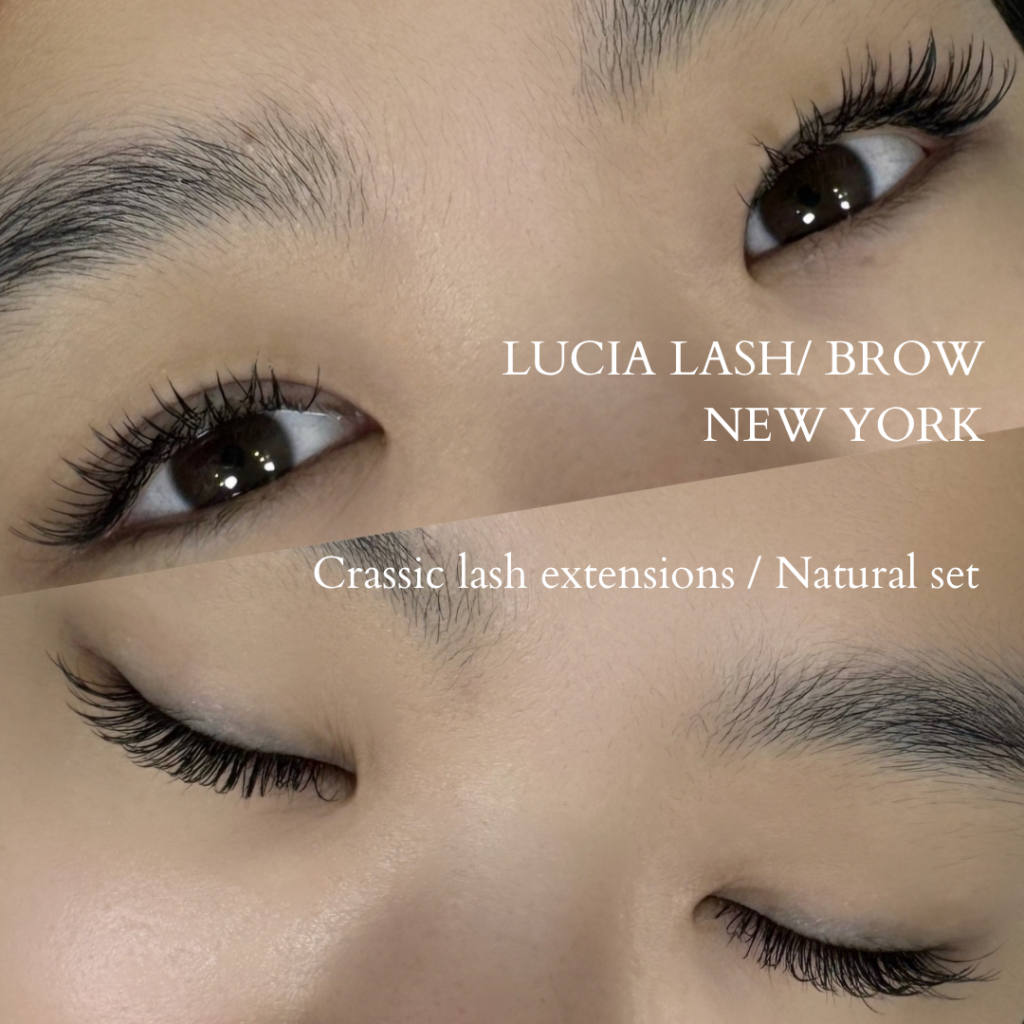
Lucia Lash/Brow New York studios serve large Asian client populations that revealed this protocol gap through pattern failures: consistently reported dryness within 48 hours, visible cuticle damage within one week, and poor curl retention despite proper technique execution. Systematic diameter measurement across affected clients identified that 0.06 to 0.08mm lashes could not tolerate standard 8 to 12 minute processing times at pH 8.0 without damage.
This discovery drove development of ethnicity-adapted protocols now deployed system-wide: diameter measurement mandatory before service, processing time reductions of 35 to 45 percent for lashes below 0.08mm, pH lowered to 7.2 to 7.5 range for very fine lashes, and extended three-phase hydration with doubled conditioning duration. These modifications emerged from New York's diversity exposure and prevent similar failures in other markets serving varied populations.
How do occupational stress patterns affect thin lash vulnerability?
New York's concentration of high-stress professional occupations creates conditions where thin lashes experience accelerated environmental compromise beyond genetic baseline. Finance professionals working 70 to 80 hour weeks under fluorescent lighting, technology workers spending 12+ hours daily at screens, and performing artists using stage makeup and removal cycles all subject lashes to chronic stress that reduces diameter and weakens structure.
Thin lashes that measure 0.09mm in suburban clients may measure 0.07mm in New York professionals despite identical genetic backgrounds. The occupational stress differential creates acquired thinness overlaying genetic baseline, producing lashes that appear acceptable by visual inspection but fail flexibility testing and break under standard chemical processing.
This pattern forced Lucia Lash/Brow New York locations to implement occupational history screening during consultations. Clients working high-stress roles receive automatic diameter measurement regardless of visual lash assessment, preventing the assumption that healthy-appearing lashes can tolerate standard protocols. The occupational correlation discovered through New York's professional population density now informs screening nationwide, protecting stressed-lash clients in all markets.
Does New York's active lifestyle expose thin lash retention limitations?
New York clients maintain exercise routines that create mechanical stress patterns revealing thin lash vulnerability invisible in less active populations. Morning SoulCycle classes, lunchtime Barry's Bootcamp sessions, evening yoga practices, and weekend long-distance running all generate sweat, friction, and face-contact forces that stress chemically lifted lashes.
Thin lashes lifted using standard protocols show dramatically accelerated curl loss in active New York clients: 2 to 3 weeks versus 4 to 6 weeks in sedentary clients with identical lash diameter. The activity differential revealed that thin lash curl retention predictions based on resting-state observations significantly overestimate real-world performance for clients subjecting lashes to daily mechanical stress.
This activity-adjusted retention framework now guides Lucia Lash/Brow New York consultations: clients exercising 5+ days weekly with thin lashes (0.07 to 0.09mm) receive explicit education that results will last 3 to 4 weeks maximum, not the 5 to 6 weeks quoted for sedentary thin-lash clients. The lifestyle-based customization prevents disappointment and manages expectations based on actual use patterns rather than theoretical chemistry predictions.
Why does environmental pollution compound thin lash chemical vulnerability?
Thin lashes have higher surface-area-to-volume ratios than normal lashes, meaning proportionally more hair surface is exposed to environmental pollutants per unit of protein mass. In New York's pollution-heavy urban environment with subway particulate exposure and traffic exhaust concentrations, this increased exposure translates to accelerated cuticle damage even before chemical services begin.
Diameter measurements on New York clients show 15 to 20 percent higher prevalence of sub-0.08mm thin lashes compared to suburban control populations, suggesting environmental factors actively thin lashes beyond genetic predisposition. When chemical lifting is applied to already pollution-compromised thin lashes, the compounded stress produces failures at rates 40 to 50 percent higher than identical protocols on suburban thin lashes experiencing lower environmental loads.
This environmental amplification factor required protocol adjustments specific to high-pollution markets. Lucia Lash/Brow New York studios reduce processing times by additional 10 to 15 percent beyond standard thin-lash modifications for clients commuting via subway or working in high-traffic areas. The pollution-adjusted protocols prevent damage that would occur using generic thin-lash guidelines not accounting for environmental stress layering.
How does client education demand in New York drive thin lash transparency?
New York clients with thin lashes arrive at consultations having researched lash lift chemistry and diameter-based risks, asking specific questions about micron measurements, processing time calculations, and damage probability percentages. This informed questioning creates accountability preventing technicians from applying standard protocols to thin lashes without disclosure and modification.
Budget salons attempting to maximize appointment volume by using identical protocols across all lash types face immediate credibility loss when thin-lash clients ask technical questions about diameter-specific adjustments. Technicians unable to provide precise modification specifications or who claim "one size fits all" approaches lose bookings to competitors demonstrating systematic thin-lash expertise.
Lucia Lash/Brow New York technicians undergo mandatory training in diameter measurement techniques, processing time calculations, and damage-risk communication. During consultations with thin-lash clients, technicians explain exact modifications: "Your lashes measure 0.078mm average, which requires reducing processing time from standard 10 minutes to 6 minutes, lowering pH from 8.0 to 7.4, and extending hydration phase from 8 to 12 minutes." This specification-level transparency converts educated clients into advocates who recommend the studio for technical competence rather than general service quality.
What role does New York play in establishing thin lash safety standards?
Thin lash protocols developed through New York's diversity exposure, occupational stress patterns, activity levels, environmental challenges, and client education demands become safety baselines deployed nationally. When modifications preventing damage in New York's maximum-stress conditions are applied in lower-stress markets, they provide additional safety margin ensuring excellent outcomes across all client populations.
New York serves as thin lash protocol stress-testing environment where genetic diversity, acquired environmental thinning, mechanical lifestyle stress, and informed client expectations converge. Protocols succeeding under these compounded challenges demonstrate robustness translating to reliable performance in markets with fewer stressors but similar thin-lash biology.
Markets observing New York's diameter-measurement adoption and processing-time modification standards can anticipate that thin lash awareness will increase nationwide as clients research service chemistry and demand specification-based customization. Salons implementing systematic thin-lash protocols position as quality leaders rather than reacting after damage complaints reveal that generic approaches fail diverse client populations.
When Should You Attempt Lash Thickening Before Reconsidering Lifting?
Clients whose thin lashes result from temporary factors rather than genetic baseline should invest 3 to 6 months in follicle strengthening protocols before attempting chemical lifting. This approach addresses root causes and may improve lash diameter enough to make lifting safe and effective.
Identifying reversible versus genetic thinness:
Reversible factors: Recent illness, medication changes, nutritional deficiencies, over-processing from previous lash services, postpartum hormonal shifts, chronic stress patterns.
Genetic factors: Family history of thin lashes, consistent thinness since adolescence, no recent changes in health or habits correlating with lash changes.
Assessment method: Review medical history, examine childhood photos if available, ask about family members' lash characteristics. If thinness appeared within past 1 to 2 years and correlates with life changes, treating it as reversible is worth attempting.
Follicle strengthening protocol (12 to 16 weeks):
Topical peptide serums: Apply peptide formulas containing copper peptides, myristoyl pentapeptide-17, or oligopeptides twice daily. These support keratin production at the follicle level.
Oral biotin supplementation: 2,500 to 5,000 mcg daily supports keratin synthesis systemically. Effects appear in 8 to 12 weeks as new lashes grow incorporating additional protein.
Dietary protein increase: Ensure 0.8 to 1.0 grams protein per kilogram body weight daily. Inadequate protein intake compromises keratin production for all hair including lashes.
Iron status optimization: Check ferritin levels through blood testing. Levels below 40 ng/mL even if technically "normal" may impair hair growth. Supplement if low under physician guidance.
Avoid additional lash stress: No chemical services, minimize waterproof mascara requiring harsh removal, gentle cleansing only, no mechanical lash curlers, no extensions during strengthening period.
Progress monitoring:
Measure lash diameter monthly using consistent technique. Look for increases of 0.01 to 0.02mm indicating new growth incorporating improved nutrition and reduced stress.
Photograph lashes monthly in consistent lighting and position to track visual improvement that diameter measurements might miss.
Track shedding rate. Normal is 1 to 5 lashes daily. Counts consistently above 6 to 8 daily suggest ongoing follicle stress requiring extended treatment.
Reassessment after 12 to 16 weeks:
Remeasure diameter and perform flexibility testing using criteria outlined previously.
If diameter improved to 0.08mm or greater and flexibility testing shows good recovery, proceed with conservative thin-lash lifting protocols.
If diameter shows no improvement or flexibility remains poor, recommend continuing strengthening protocols for additional 12 weeks before reassessing.
If improvement is marginal at 0.06 to 0.07mm, discuss whether mechanical curling alternatives are more appropriate than pursuing chemical lifting that remains high-risk.
How Do You Repair Brows Damaged By Failed Lamination?
Brow recovery from lamination damage requires structured treatment protocol lasting 8 to 16 weeks depending on damage severity. Casual conditioning or waiting for new growth without intervention extends recovery unnecessarily and may leave permanent sparse patches if damaged follicles are not actively supported.
Immediate damage control (Days 1 to 7):
Stop all chemical exposure including tinting, waxing chemical hair removal, or makeup removers containing strong solvents near brows. Damaged hair cannot tolerate additional stress.
Apply keratin-based repair serum twice daily, morning and night. Product should contain hydrolyzed keratin proteins small enough to penetrate damaged cuticles. Larger protein molecules sit on surface without repair benefit.
Avoid water temperatures above body temperature on brows. Hot water swells damaged cuticles further. Lukewarm water only for cleansing.
Sleep on silk or satin pillowcase to reduce mechanical friction on fragile brows during sleep movement.
Active repair phase (Weeks 2 to 8):
Continue keratin serum application but increase to three times daily if brows feel brittle or show visible damage.
Add peptide growth serum specifically formulated for brows. Peptides support follicle health and may accelerate growth of new, healthy brows to replace damaged sections. Apply once daily, typically at night.
Implement castor oil treatment 2 to 3 times weekly. Apply small amount with clean spoolie brush, leave on 20 to 30 minutes, remove gently with oil-based cleanser. Castor oil provides fatty acids that help restore lipid barrier in damaged cuticles.
Supplement with biotin 2500 to 5000 mcg daily if diet does not include adequate B-vitamin sources. Biotin supports keratin synthesis for new hair growth. Consult physician before supplementation if taking other medications.
Maintenance and monitoring (Weeks 9 to 16):
Reduce keratin serum to once daily as improvement becomes visible. Over-application can create protein buildup.
Assess growth of new brow hairs. Healthy new growth indicates follicles have recovered. Continued slow growth or thin, weak new hairs suggest need for extended treatment or medical evaluation.
Avoid all chemical brow services until full 16-week recovery period completes and flexibility testing shows normal strength return.
Document recovery with weekly photos to track actual improvement versus subjective perception. Photos reveal subtle changes that are difficult to notice day-to-day.
When to seek medical evaluation:
• If brows show no improvement after 8 weeks of treatment protocol.
• If new growth is significantly thinner or lighter than pre-damage baseline.
• If patches of complete hair loss develop rather than general thinning.
• If skin in brow area becomes inflamed, develops rash, or shows signs of infection.
These indicators may signal that damage triggered underlying dermatological conditions requiring medical treatment beyond cosmetic repair protocols. Dermatologists can prescribe prescription-strength treatments and evaluate for conditions like alopecia areata or scarring that requires different intervention approaches.