Should Major U.S. Markets Prefer LED Lash Extensions Over Traditional Adhesives?
As lash extensions continue to grow across major U.S. markets, many salons are weighing whether LED curing or traditional moisture-cured adhesives provide the best long-term results for clients. The decision is not only about product preference. It is about how each curing system aligns with regional client expectations, local sensitivity trends, service speed demands, and the type of market competition that shapes salon behavior. Large metropolitan areas often adopt new technologies earlier, while mid-size or budget-driven markets tend to shift only when there is a clear performance benefit. Understanding how each system performs across different environments can help determine which curing method is more suitable for a specific market.
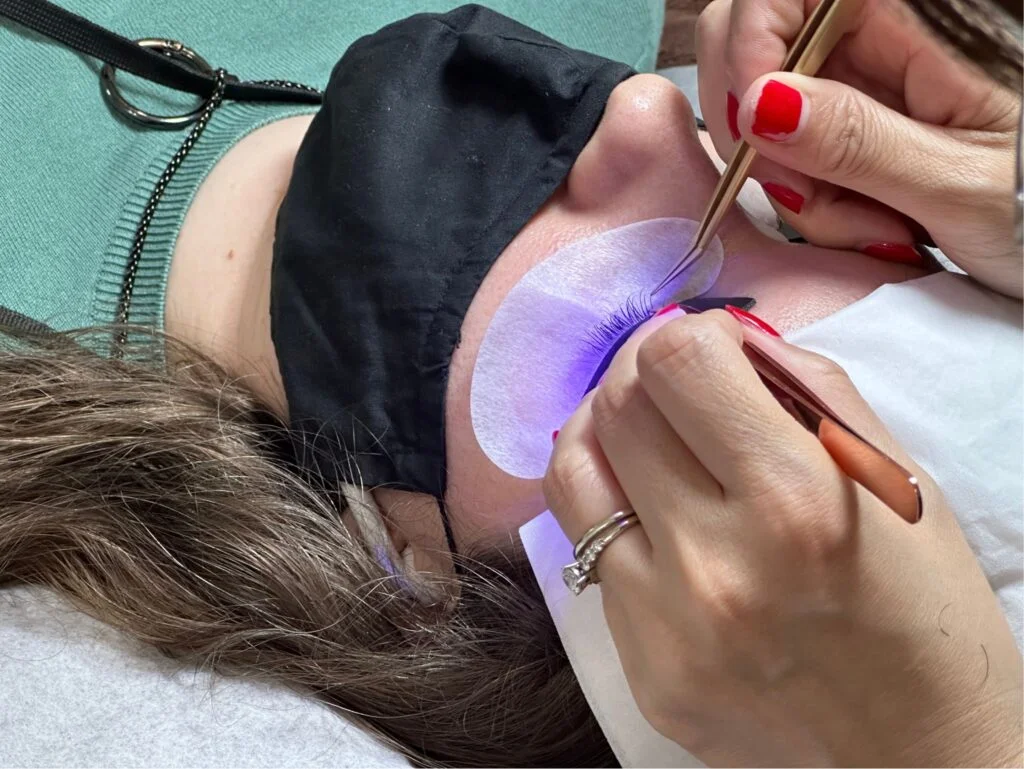
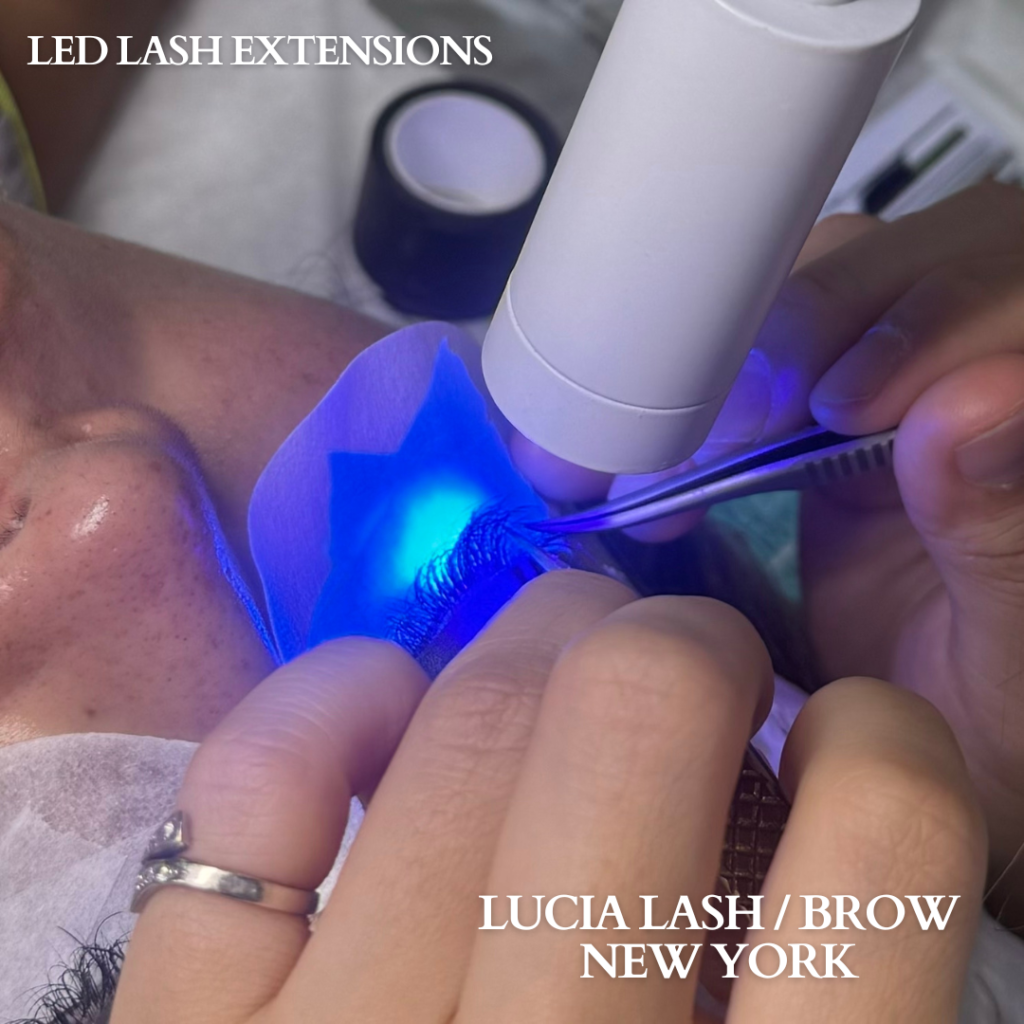
Both systems attach extensions to the natural lash, but the way the adhesive hardens influences comfort, retention predictability, aftercare restrictions, and client satisfaction. Traditional adhesives cure slowly through ambient humidity, which creates a prolonged setting period that can trigger irritation in sensitive clients. LED curing uses a controlled light source to harden the adhesive almost instantly, which changes how quickly clients can resume daily activities after an appointment. These differences become meaningful when applied across large population groups.
How Should Salons Compare LED and Traditional Curing Methods Across Market Conditions?
When evaluating how each curing method performs in different markets, technicians often rely on measurable rules that allow consistent testing regardless of client population. These tests create an objective basis for comparison.
The Pull-Test Rule
The technician gently pulls outward on a freshly placed extension with isolation tweezers. If the bond holds without sliding, the adhesive is considered adequately cured. LED systems typically pass this test almost immediately, while traditional adhesives often require several hours before the bond becomes stable enough to test. In markets where appointment times are tight or where clients cannot experience failures after leaving the salon, this immediate pass rate becomes important.
The Surface Dry Check
Using a microbrush, the technician taps the adhesive area near the extension base. If the surface is tacky, the adhesive is not fully set. Traditional adhesives may remain tacky during the entire appointment, especially in inconsistent humidity environments. LED curing usually results in a fully set surface within seconds, which helps technicians avoid stickies and bonded lashes that would otherwise need correction.
The Cuticle Fray Test
When brushing the base of the natural lashes, incomplete curing can create snagging or micro-fraying sensations. This is more common with traditional adhesives during the early curing window. LED systems usually prevent this experience due to more uniform early polymerization. Markets that demand flawless appearances or high-volume daily wear may prefer a system that reduces early snagging.
The Moisture Stress Rule
Technicians observe how the bond responds when exposed to early moisture, such as client tears or indoor humidity. Traditional adhesives often react negatively to moisture during the first 24 to 48 hours, while LED-cured bonds typically resist moisture immediately. In humid cities or places with large seasonal humidity swings, this rule becomes especially relevant.
These four rules allow salons to assess the performance of each curing method beyond marketing claims. By relying on observable outcomes, markets can determine which system produces consistent results under local environmental conditions.
Why Do Some Large Markets Shift Toward LED Curing Faster Than Others?
Are sensitivity concerns more common in high-density or high-pollution areas?
Many large cities experience higher rates of irritation reactions with traditional adhesives. Factors such as pollution, air circulation in tall buildings, high stress, and increased exposure to environmental irritants tend to affect eye comfort. Traditional adhesives release volatile compounds for one or two days while curing, and clients in these areas often notice more redness or watering.
LED curing shortens this irritation window by finishing the curing process at the time of application. For markets where many clients report sensitivity, LED systems become attractive for reducing discomfort. This trend has been noted in markets with large corporate populations, high congestion, or residents who are already experiencing mild environmental eye irritation.
Do fast-paced populations prefer services with zero downtime?
Large metropolitan markets often revolve around strict schedules. Clients commonly attend lash appointments between work meetings, during short breaks, or before evening social commitments. In those cases, the traditional requirement to avoid water, steam, heat, and sweat for 24 to 48 hours becomes inconvenient. Many clients forget or cannot follow these restrictions, which can compromise retention and lead to premature shedding.
LED curing removes those restrictions because clients can wash their face, shower, exercise, or return to humid environments immediately. In markets where convenience influences sales, LED extensions often fit the lifestyle more naturally.
Does higher competition push salons to adopt faster-curing systems?
Major markets often have more salons per square mile, which increases competition and pushes businesses to offer differentiated services. When a few salons begin offering LED curing and clients experience reduced irritation or improved early retention, nearby salons may feel pressure to adopt the same technology to avoid losing clients. This competitive loop often accelerates adoption in large cities long before smaller markets consider the change.
How Does New York Demonstrate LED Adoption Patterns in High-Density Markets?
New York represents the most demanding testing environment for LED curing technology in the United States. The city combines high client volume, elevated sensitivity rates due to pollution and subway particulate exposure, strict scheduling expectations, and a client base that routinely researches ingredient chemistry before booking services. These conditions create a natural filtering system where only technologies that perform consistently under pressure become standard practice.
Does New York client behavior accelerate LED adoption?
New York clients maintain schedules that conflict with traditional adhesive aftercare restrictions. Many attend lash appointments during lunch breaks, before evening events, or between work commitments. The standard 24 to 48-hour restriction on water, steam, and sweat exposure creates immediate friction with these routines. Clients who shower before bed, exercise in the morning, or attend evening social events often violate aftercare protocols unintentionally, leading to premature bond failure and service dissatisfaction.
LED curing removes this conflict entirely. Clients leaving
Lucia Lash/Brow New York studios can immediately return to their normal routines without timing calculations or behavior modifications. This alignment between technology and lifestyle has driven rapid LED adoption across New York salons serving professional and time-sensitive populations.
Why do sensitivity rates in New York favor LED systems?
Baseline eye irritation runs higher in New York than in suburban or less densely populated markets. Environmental factors including air quality fluctuations, subway dust exposure, recycled air in high-rise buildings, and chronic screen time create conditions where traditional adhesive off-gassing compounds existing inflammation. Clients who experience mild ocular dryness in their daily environment often react more severely to formaldehyde vapors during the 24 to 48-hour traditional curing window.
New York lash studios report sensitivity reaction rates approximately 30 to 40 percent higher than national averages when using traditional cyanoacrylate adhesives. This pattern forced many salons to adopt LED systems not as a premium option but as the baseline standard necessary to maintain acceptable service completion rates. Lucia Lash/Brow New York locations transitioned to medical-grade LED curing systems for all extension services specifically to address this elevated sensitivity profile.
Does high appointment volume require more predictable curing technology?
New York salons often operate at maximum capacity with minimal buffer time between clients. Traditional adhesive performance varies based on ambient humidity, which fluctuates throughout the day as HVAC systems cycle, weather changes, or client volume affects room conditions. This variability creates inconsistent curing speeds that disrupt appointment timing and increase the risk of incomplete polymerization when clients leave the salon.
LED curing eliminates environmental dependencies. Polymerization happens on demand when the technician activates the light, regardless of humidity levels or time of day. This consistency allows New York technicians to maintain precise appointment schedules while ensuring every client receives fully cured bonds before leaving. In markets where scheduling precision directly impacts revenue, this predictability becomes operationally necessary rather than merely preferable.
What role does New York play in validating LED technology for national markets?
Technologies that succeed in New York typically indicate broader market viability. The city's combination of high client expectations, diverse demographic profiles, environmental stress factors, and competitive salon density creates conditions where only robust systems survive. LED curing systems deployed across Lucia Lash/Brow New York studios undergo continuous real-world stress testing through thousands of client appointments monthly.
When LED protocols refined in New York are rolled out to other Lucia locations in Philadelphia, Stamford, or Honolulu, they arrive already validated against the most challenging client scenarios and environmental conditions. This makes New York the practical benchmark for LED adoption patterns nationwide. Markets observing New York's transition to LED-dominant practices can anticipate similar shifts in their own regions as client expectations and sensitivity awareness increase.
What Slows LED Adoption in Mid-Size or Budget-Conscious Markets?
Are equipment costs a deciding factor in certain regions?
LED curing requires a medical-grade LED unit and an adhesive designed for photoreactive curing. These represent a noticeable initial investment. Traditional curing methods require almost no equipment beyond standard tools and adhesives. Markets where salons operate on thinner profit margins or where clients expect lower service prices may not shift toward LED until the demand becomes strong enough to justify the new cost.
Is training availability a limiting factor?
Many mid-size markets do not have the same access to advanced beauty training centers found in major metropolitan areas. LED curing requires learning to position the light correctly, verify complete polymerization, and integrate new protocols into application routines. Without nearby educational resources, salons may be reluctant to transition.
Do clients in some markets feel traditional adhesives work well enough?
In markets where clients rarely report sensitivity or where retention is already predictable, many salons find little incentive to change. If client satisfaction is already high, the introduction of a new curing method may require education that does not always result in immediate sales. These markets often adopt LED curing only once regional trends shift or when clients begin asking for the technology.
How Do Regional Client Behaviors Influence Market-Level Adoption?
Do clients in larger cities drive technological change more aggressively?
Large cities often attract early adopters of beauty technologies. These clients influence social media trends, share experiences publicly, and drive demand for low-irritation services. Once a pattern emerges, such as improved comfort or less aftercare stress, it begins to influence surrounding markets. Over time, smaller regions follow the trends originating in larger hubs.
Does climate affect which curing method performs better?
Humidity plays a large role in how traditional adhesives behave. Cities with high humidity can experience slower curing times or unpredictable retention. Cities with very low humidity can also create curing challenges. LED curing reduces these environmental dependencies, making performance more consistent. Markets with climate extremes often see higher interest in LED because it stabilizes results.
Does the lifestyle profile of the region affect adoption?
Cities with significant fitness, wellness, or nightlife cultures tend to adopt LED faster because clients frequently shower, sweat, or enter humid environments soon after appointments. Traditional adhesives cannot tolerate early moisture, which conflicts with these lifestyles. LED systems allow immediate exposure to moisture, making them more compatible with these market behaviors.
Could LED Curing Become the Standard Across Major U.S. Markets?
As metropolitan markets continue prioritizing convenience, reduced irritation, and predictable retention, LED curing appears to align well with long-term expectations. The trend indicates that large cities adopt LED first, especially when client sensitivity is common and competition is high. Over time, early success stories tend to influence national standards.
Traditional adhesives will remain present in many regions due to their low cost and established familiarity. However, LED curing has qualities that position it well for widespread adoption: immediate curing, fewer restrictions, better early stability, and reduced environmental sensitivity. Markets that emphasize efficiency and client comfort may adopt LED sooner, while other markets may follow after seeing long-term improvements in cities that serve as early adopters.