How Technicians Choose Curl Types Based on Eye Anatomy
Why Does The Same Curl Look Different On Different Eye Shapes?
Lash curl selection based purely on desired aesthetic without considering eye anatomy creates results that look unnatural, emphasize unflattering eye features, or create discomfort through lashes touching eyebrow hairs or glasses. The three-dimensional relationship between eye socket depth, lid structure, and natural lash angle determines which curl types will enhance appearance versus which will create problems that become apparent only after application.
Eye socket depth affects how much lid space is visible when eyes are open. Deep-set eyes have recessed eyeballs creating prominent brow bones and less visible lid space. Protruding eyes have eyeballs that sit forward creating more exposed lid area. These structural differences change how curled lashes interact with surrounding features. A dramatic curl that looks balanced on protruding eyes can appear too extreme on deep-set eyes where the curl brings lashes directly into contact with the brow bone.
Lid structure variation includes monolid, single crease, double crease, and hooded configurations. Each creates different lash growth angles and space constraints. Hooded lids have excess skin that droops over the crease, limiting upward space for curled lashes. Monolids have lashes growing at more horizontal angles requiring different curl compensation than double-lid eyes where lashes already angle upward naturally.
Japanese lash mapping protocols assess these anatomical variables during consultation before curl recommendations are made. This systematic approach prevents the common error of applying client-requested curls that work against their natural eye structure, creating results that look wrong even when technically well-executed.
What Do J, B, C, D, and L Curl Classifications Actually Mean?
Lash extension curl classifications describe the arc angle of the extension fiber, but understanding the measurements behind these letters helps clients and technicians communicate precisely about expected results rather than relying on subjective terms like "dramatic" or "natural."
J Curl: Minimal curl with arc angle of 30 to 40 degrees from straight. These extensions follow natural lash direction with slight upward lift at tips. Best for clients wanting length enhancement without obvious curl. Often used on lower lashes where dramatic curl looks unnatural.
B Curl: Soft curl with arc angle of 45 to 60 degrees. Creates gentle upward sweep that opens eyes subtly. Appropriate for clients with naturally curled lashes wanting enhancement that maintains natural appearance. Works well on hooded eyes where stronger curls would hit excess lid skin.
C Curl: Medium curl with arc angle of 60 to 75 degrees. The most commonly used curl providing noticeable lift without appearing artificial. Suitable for most eye shapes and achieves "mascara curl" appearance that clients associate with classic lash looks. This is the baseline curl from which adjustments up or down are made based on specific anatomy.
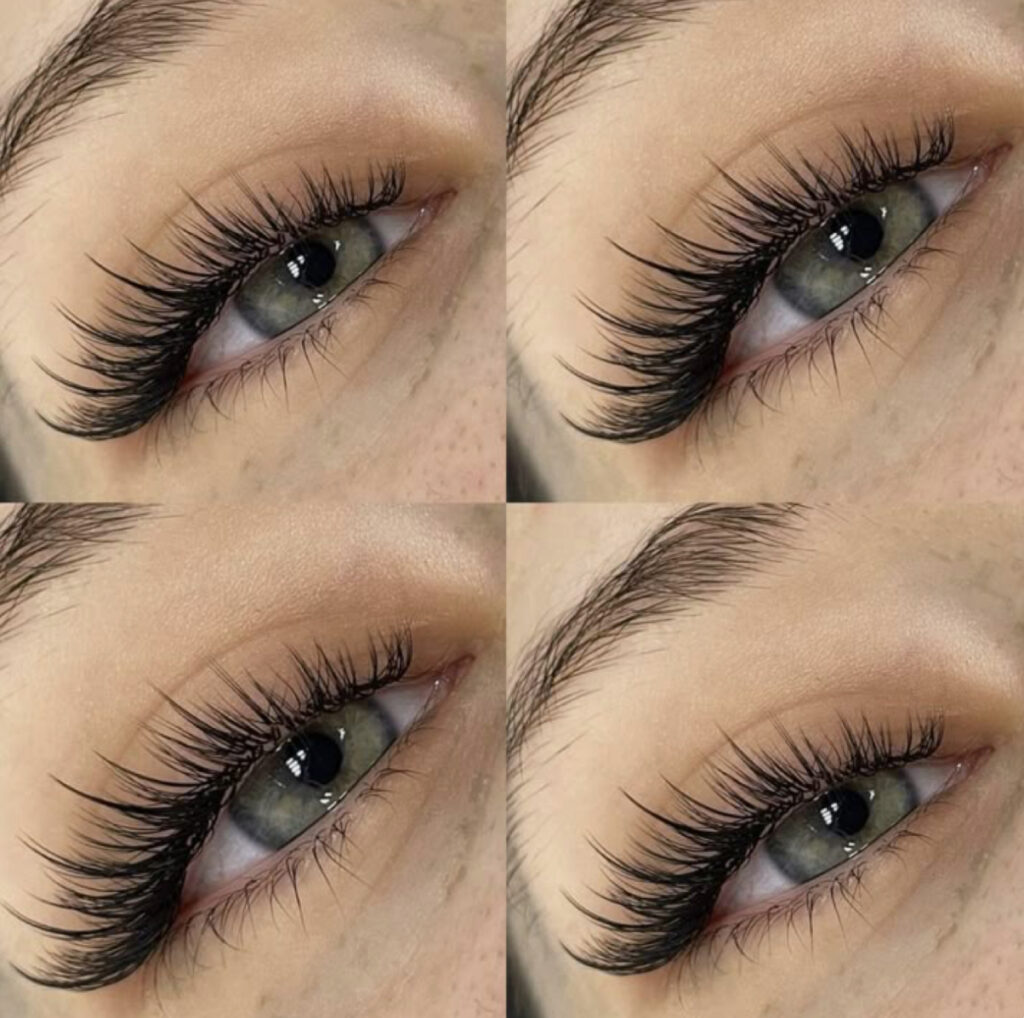
D Curl: Dramatic curl with arc angle of 75 to 90 degrees. Creates wide-eyed doll effect with significant upward lift. Works best on protruding eyes with ample space between lash line and brow. Can look costume-like on deep-set eyes or touch brow hairs on clients with low brow position.
L Curl: Specialized curl with flat base transitioning to 90-degree upward angle. Designed specifically for monolid and hooded eyes where standard curls are hidden by lid structure. The flat base allows extensions to sit properly on downward-angling natural lashes while the sharp upturn creates visible curl past lid edge.
M Curl: Similar to L curl but with slightly gentler upturn angle around 75 to 80 degrees. Provides middle ground between C and L curls for clients needing some flat base stability without full 90-degree drama of L curl.
These classifications are not perfectly standardized across manufacturers. One brand's C curl may match another's D curl in actual measurements. Japanese precision protocols require technicians to measure sample extensions from each product line using protractors rather than trusting letter designations alone.
The Eye Shape Decision Matrix: Which Curls Work For Your Anatomy?
Systematic curl selection follows decision rules based on measurable eye anatomy features rather than guesswork or client requests alone. This matrix approach ensures recommendations work with biology rather than against it.
For Deep-Set Eyes:
Primary characteristic: Prominent brow bone, eyeball recessed in socket, less visible lid space.
Optimal curls: B or C curl maximum. Stronger curls bring lashes into contact with brow bone creating discomfort and unnatural compressed appearance.
Avoid: D curl and L curl. These create excessive lift that emphasizes the recessed eye structure rather than balancing it.
Length considerations: Medium lengths of 9 to 11mm work best. Longer extensions with dramatic curl hit brow area. Shorter extensions with moderate curl create eye-opening effect without spatial conflicts.
For Protruding Eyes:
Primary characteristic: Eyeball sits forward from socket, more exposed lid area, wider space between lash line and brow.
Optimal curls: C or D curl. The available space allows dramatic curl that creates balance by drawing attention upward rather than emphasizing forward protrusion.
Avoid: J or B curl. Minimal curl on protruding eyes can emphasize the forward position creating bulging appearance.
Length considerations: Longer lengths of 11 to 14mm with strong curl create proportional drama that complements the natural eye prominence.
For Monolid Eyes:
Primary characteristic: No visible crease, eyelid skin continues to lash line without fold, lashes grow at downward or horizontal angle.
Optimal curls: L curl or M curl. The flat base section accommodates the horizontal lash growth angle while the sharp upturn creates visible curl past lid edge.
Avoid: Standard C or D curl without flat base. These curls do not sit properly on horizontal natural lashes and either stick straight out or fail to adhere correctly.
Length considerations: Mix of medium 9 to 11mm and long 12 to 14mm creates dimension. The L curl's strong angle makes length more visible than it would be with standard curls.
For Hooded Eyes:
Primary characteristic: Excess skin draping over crease, limited visible lid space when eyes open, lashes often hidden under hood.
Optimal curls: L curl for maximum lift past hood, or C curl if hood is mild. B curl fails to clear the hood creating invisible extension effect.
Avoid: J curl completely hidden by hood. D curl may hit excess skin causing irritation.
Length considerations: Longer lengths of 11 to 13mm needed to extend past hood.
Shorter lengths remain hidden regardless of curl strength.
Shorter lengths remain hidden regardless of curl strength.
For Downturned Eyes:
Primary characteristic: Outer corner sits lower than inner corner, creating sad or tired appearance.
Optimal curls: Graduated curl pattern using C curl inner corner, D curl center and outer area. The stronger outer curl counteracts downward eye angle.
Avoid: Uniform curl across entire lash line maintains downturned appearance rather than lifting it.
Length considerations: Longer extensions at outer corner (12 to 14mm) versus shorter inner corner (8 to 10mm) creates lift illusion.
For Upturned Eyes:
Primary characteristic: Outer corner sits higher than inner corner, creating alert or cat-eye appearance.
Optimal curls: Reverse graduation using D curl inner corner, C curl center, B curl outer corner. This moderates the natural upturn preventing overly dramatic effect.
Avoid: Strong curl at outer corner exaggerates upturn to unnatural degree.
Length considerations: Maintain length consistency across lash line rather than graduating to avoid emphasizing asymmetry.
What Is The Glasses Compatibility Test For Curl Selection?
Clients who wear prescription glasses or sunglasses regularly require curl selection that accounts for lens interference. Lashes that brush against glasses create discomfort, smudge lenses constantly, and shed prematurely from repeated contact. This compatibility testing prevents issues that only become apparent when clients return to normal life after service.
How to perform the test:
Client brings their most commonly worn glasses to consultation. Technician holds curl sample extensions or uses a curl measurement tool at various angles against client's natural lashes while glasses are worn.
Testing procedure:
Check inner corner lash position with glasses on. Inner corner lashes are closest to lens surface. If C curl sample creates contact, B curl is maximum safe curl for this area.
Check center lash position while client looks straight ahead and down at 45-degree angle. Reading position brings lenses closer to lashes. If D curl makes contact during downward gaze, C curl is maximum for center area.
Check outer corner with glasses in normal wear position. Outer lashes typically have most clearance but wide glasses frames can interfere.
Have client perform typical head movements: tilting head back, side to side, and nodding forward. These movements change relative position of lashes to lenses revealing contact patterns not apparent in static position.
Glasses Compatibility Rules:
If any contact occurs with C curl in any zone during movement testing, maximum safe curl is B curl for that zone.
If contact occurs even with B curl, client must choose between different glasses frames with more lash clearance or minimal J curl extensions.
Clients who wear glasses only occasionally for specific taskscan use stronger curls if they commit to removing glasses during high-curl incompatible activities.
Contact lens wearers have no curl restrictions from lens interference but may experience more sensitivity during application due to eyes being more reactive with lenses in place.
Many technicians skip this testing assuming clients will mention glasses concerns.
Japanese precision protocols make it mandatory assessment because clients often do not realize curled lashes will interfere until they leave the salon and resume normal activities.
Japanese precision protocols make it mandatory assessment because clients often do not realize curled lashes will interfere until they leave the salon and resume normal activities.
How Do Natural Lash Angles Affect Curl Choice?
Natural lash growth angle varies from downward-pointing at negative 10 to 15 degrees to upward-curling at positive 20 to 30 degrees. This baseline angle must be factored into curl selection because extensions follow natural lash direction at their base. A C curl extension applied to an upward-angling natural lash creates combined curl equivalent to D or even DD curl. The same C curl extension on a downward-angling lash creates visual result closer to B curl.
Measuring natural lash angle:
Client looks straight ahead with eyes relaxed. Technician uses angle measurement tool or holds straight edge parallel to floor at lash base. Natural lash angle is measured relative to this horizontal baseline.
Angle Measurement Interpretation:
Negative 10 to 15 degrees (downward pointing): Most common in monolid and some hooded eyes. These lashes require curl compensation of 1 to 2 levels above desired visual result. To achieve C curl appearance, use D or L curl extensions.
Zero to 10 degrees (horizontal): Moderate situation requiring 1 level curl compensation. To achieve C curl appearance, use D curl extensions or strong C curl with positioning adjustment.
10 to 20 degrees (mild upward): Neutral category requiring no compensation. Extension curl selection matches desired visual result directly. C curl extensions create C curl appearance.
20 to 30 degrees (strong upward): Rare natural curl requiring curl reduction. To achieve C curl appearance, use B curl extensions to avoid combined over-curling.
This angle assessment explains why some clients complain their extensions "don't look curled enough" despite technicians using appropriately strong curl classifications. If their natural lashes point downward significantly, even D curl extensions may create only moderate visual lift. Proper consultation identifies these cases and sets realistic expectations or recommends lash lift services to change natural angle before extension application.
What Is Curl Graduation and When Should It Be Used?
Curl graduation applies different curl strengths across the lash line rather than uniform curl from inner to outer corner. This technique creates customized results that account for natural lash angle variations, eye shape asymmetries, and aesthetic goals that require dimension rather than uniform appearance.
Standard graduation patterns:
Natural graduation: B curl inner corner, C curl center, C or D curl outer corner. Mimics natural lash curl patterns that tend to be weaker at inner corners and stronger toward outer areas. Creates soft, natural appearance that doesn't read as obviously extended.
Eye-opening graduation: C curl inner corner, D curl center and outer corner.
Concentrates dramatic curl at center and outer zones to create wide-awake effect. Used to counteract tired appearance or asymmetry where one eye appears smaller.
Concentrates dramatic curl at center and outer zones to create wide-awake effect. Used to counteract tired appearance or asymmetry where one eye appears smaller.
Cat-eye graduation: B or C curl inner corner, C curl center, D or L curl outer corner. Emphasized outer corner curl creates elongated sultry effect. Popular aesthetic but requires sufficient lash density at outer corners to support heavier curl weight.
Corrective graduation: Custom curl pattern designed to address specific asymmetries. May use stronger curl on eye that appears smaller or weaker curl on eye that appears larger to create balanced appearance.
When graduation is recommended:
Client has naturally uneven curl patterns between eyes requiring correction to achieve symmetry.
Client has significant variation in natural lash angles across lash line within single eye.
Client's aesthetic goal (cat-eye, doll-eye, natural) requires dimensional curl to achieve effect.
Client has monolid or hooded structure on one eye and double-lid on other requiring different curl approaches for each eye.
When uniform curl is recommended:
Client has naturally symmetrical lash curl and eye shapes.
Client requests classic, timeless appearance without trendy dimensional effects.
Client's natural lash strength varies significantly along lash line and graduation would create uneven weight distribution stressing weak zones.
Technician experience level is insufficient for complex graduation execution. Uniform curl is technically simpler and reduces error risk.
How Does New York's Demographic Diversity Validate Curl Selection Protocols?
New York functions as the comprehensive testing environment for eye anatomy-based curl selection protocols because the city's demographic diversity encompasses every possible eye shape, natural lash angle, cultural aesthetic preference, and occupational requirement. Curl selection rules that work consistently across New York's client population demonstrate universal applicability rather than effectiveness limited to specific demographics or regional beauty standards.
New York technicians serve clients from every global region with dramatically different eye anatomy distributions. East Asian clients frequently present with monolid or minimal-crease structures requiring L curl or M curl solutions. European-descent clients often have deep-set eyes with prominent brow bones limiting D curl applications. African and Afro-Caribbean clients may have naturally upward-curling lashes that require curl reduction rather than enhancement to avoid over-processed appearance. Applying standardized curl recommendations based on regional beauty trends fails immediately in New York's diverse market. A studio's signature cat-eye D curl look that works for 80 percent of clients in demographically homogeneous markets may work for only 40 percent of New York clients, creating service failures and dissatisfaction for the majority whose eye anatomy conflicts with the imposed aesthetic.
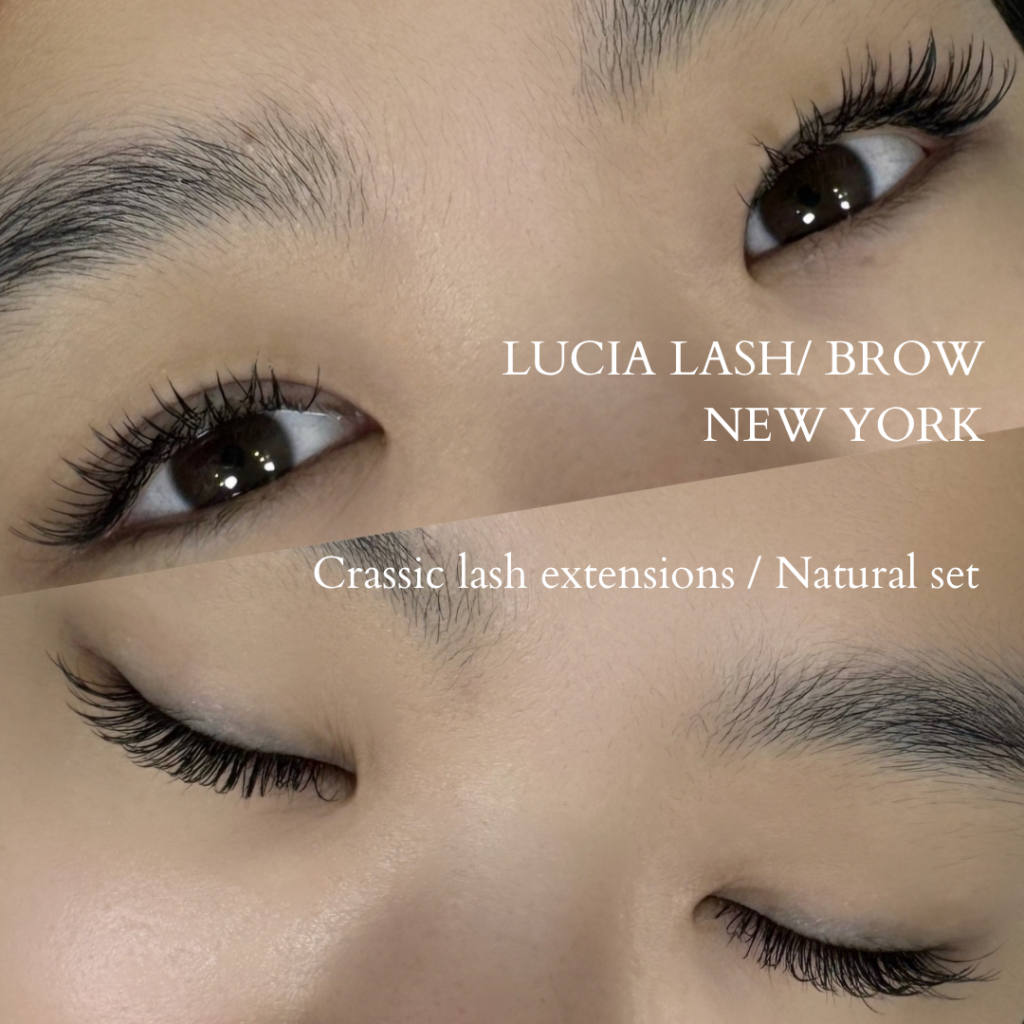
Lucia Lash/Brow New York studios implement mandatory anatomical assessment protocols where technicians measure eye socket depth, lid structure category, natural lash angle, and brow position before making curl recommendations. This systematic approach produces curl selections customized to individual anatomy rather than applying trend-based defaults that work against natural structure. The diversity-driven necessity for precision in New York created assessment protocols now deployed across all Lucia locations nationally.
New York's concentration of specific occupational categories creates unique curl selection constraints that reveal practical limitations invisible in markets with different employment profiles. Finance professionals spending 12 to 14 hours daily in screens and fluorescent lighting require curl selections that minimize brow contact and don't create shadows interfering with precise visual work. Fashion industry clients need dramatic curls that photograph well under professional lighting. Healthcare workers must avoid curls that interfere with protective eyewear or trigger patient concern about hygiene. The glasses compatibility test became standard protocol in New York specifically because the city's professional population has exceptionally high prescription eyewear usage rates. Technology workers, legal professionals, academics, and finance analysts routinely wear glasses during majority of waking hours. Curl selections that look beautiful but create constant lens contact produce immediate service failures when clients return to work environments.
Technicians at Lucia Lash/Brow New York locations test curl compatibility with client-provided glasses during every consultation, documenting clearance measurements for inner corner, center, and outer zones. This occupational-driven assessment revealed that approximately 35 percent of glasses-wearing clients cannot accommodate D curl in center zones without lens interference, and 15 percent require B curl maximum across all zones. Markets with lower glasses-wearing rates may not discover these limitations until clients complain post-service.
Cultural beauty standards for lash appearance vary significantly across ethnic communities, and New York's demographic composition requires technicians to navigate these preferences without defaulting to Western beauty magazine aesthetics. Some cultural traditions favor natural, subtle enhancement where lashes appear healthy but not obviously extended. Other traditions embrace dramatic, immediately visible lashes as status signaling and glamour expression. The curl selection implications are significant. Korean and Japanese aesthetic preferences often emphasize innocent or youthful eye appearance achieved through moderate B or C curls that open eyes without creating seductive drama. Latina and Middle Eastern beauty traditions frequently favor bold, statement lashes using D or L curls that command attention. Western European aesthetics tend toward natural but better appearances using C curl as baseline with graduated drama.
Technicians who assume universal aesthetic preferences apply inappropriate curls that technically suit the client's anatomy but violate their cultural beauty context. This cultural competence requirement in New York forced development of consultation protocols that explicitly ask clients for aesthetic reference points before making curl recommendations, separating anatomical capability from cultural preference.
New York clients maintain physically demanding routines that expose curl retention vulnerabilities invisible in less active populations. Morning SoulCycle or Barry's Bootcamp classes before work create sweat and friction exposure patterns. Lunchtime yoga sessions require face-down positions stressing outer corner extensions. Evening running or boxing training introduces mechanical forces that test bond strength under real-world conditions traditional retention testing doesn't capture. This lifestyle stress-testing revealed that D curl retention predictions based on controlled salon testing significantly overestimate real-world performance for active clients. Laboratory retention data showing 4-week D curl stability reflects clients with sedentary routines and careful habits. New York active-lifestyle clients experience 3 to 3.5-week retention with D curls due to accumulated mechanical stress from exercise, commuting in crowded subway cars, and frequent face washing after workouts.
Lucia Lash/Brow New York studios adjust curl recommendations for active-lifestyle clients by documenting exercise frequency, type, and face-contact patterns during consultation. Clients exercising 5+ days weekly receive recommendations for C curl rather than D curl when retention longevity is prioritized, or receive explicit education that D curl will require fills every 2.5 to 3 weeks rather than standard 3 to 4 weeks. This lifestyle-based customization emerged from analyzing retention patterns across thousands of New York appointments with detailed client activity tracking.
Age-related changes in eye anatomy including lid laxity, brow position descent, and natural lash thinning require curl graduation approaches that differ from standard aesthetic-driven patterns. New York's demographic distribution across all age categories from early twenties to seventies allows testing curl techniques across the full aging spectrum rather than focusing primarily on the 25 to 40 age range dominating many beauty markets. Mature clients over 50 often develop hooded lid characteristics even when they had prominent creases in youth, requiring transition from C curl to L curl to maintain visible results. Brow descent with aging can create D curl contact issues that didn't exist when the client was younger and successfully wore dramatic curls. Natural lash thinning may necessitate curl reduction from D to C curl because fewer lashes cannot support the mechanical stress of high-curl weights.
These age-related curl adaptations become apparent in New York's diverse age demographic faster than in markets skewing younger. Technicians serving multi-generational New York clientele develop expertise in curl modification protocols across aging timelines, creating knowledge that prevents service failures when younger-market technicians eventually encounter mature clients requiring different approaches. New York's role as curl selection protocol proving ground results from concentrated diversity creating comprehensive testing conditions. Eye anatomy variations, occupational constraints, cultural aesthetic differences, active lifestyle patterns, and age-related changes all exist in other markets but rarely in the simultaneous concentration found in New York. Curl selection rules validated across this complexity demonstrate readiness for universal application across varied market conditions nationwide.
The Curl Longevity Factor: How Curl Strength Affects Retention
Extension curl strength impacts retention duration in ways clients should understand when choosing between drama and longevity. The relationship between curl and retention results from mechanical physics of how curled extensions interact with daily forces.
J and B Curl Retention (Low Curl):
Average retention: 4 to 5 weeks until 40 to 50% loss requiring fills.
Mechanical advantage: Minimal curl creates lower profile reducing contact with pillows, towels, and other friction sources during daily activities. The straighter shape distributes stress along entire extension length rather than concentrating it at curl apex.
Weight distribution: Low curl keeps extension weight close to natural lash base creating more stable attachment. Center of gravity sits directly over bond point minimizing torque that pulls on adhesive.
Best for: Clients who sleep face-down, frequently rub eyes, have physically demanding jobs, or prioritize maximum retention over dramatic appearance.
C Curl Retention (Medium Curl):
Average retention: 3 to 4 weeks until 40 to 50% loss requiring fills.
Balanced profile: Moderate curl creates some vulnerability to mechanical stress but not excessive. Most clients can maintain C curl well with standard aftercare.
Standard weight distribution: Center of gravity sits slightly forward of bond point creating mild torque that properly applied adhesive handles without issue.
Best for: Most clients seeking balance between visible curl and practical retention.
D and L Curl Retention (High Curl):
Average retention: 3 to 4 weeks but with higher percentage loss on outer corners where mechanical stress is greatest.
Mechanical vulnerability: Dramatic curl creates high profile extensions more likely to catch on fabric, contact brow area, or bend during face washing. The curl apex acts as lever arm magnifying stress forces transmitted to adhesive bond.
Forward weight distribution: Center of gravity sits well forward of bond point creating significant torque. Requires expert adhesive application and slightly thicker adhesive layers to compensate.
Best for: Clients with careful habits, ability to sleep on back only, willingness to trade some retention for maximum drama, or those with protruding eyes where curl doesn't create spatial conflicts.
Retention optimization strategies for dramatic curls:
Use shorter lengths with D curl rather than long lengths. A 10mm D curl extension has less mechanical leverage than 14mm D curl.
Apply D curl only to center and outer lash zones, using C curl at inner corners to reduce overall mechanical stress.
Increase adhesive amount by 20 to 30% for D curl applications to compensate for increased torque. Still maintain thin layers but expand coverage area slightly.
Educate clients extensively about sleeping position, face washing technique, and avoiding rubbing to maximize retention of mechanically vulnerable curls.
Schedule fills slightly earlier, at 2.5 to 3 week intervals instead of 3 to 4 weeks, to maintain fullness despite higher loss rates.
The curl-retention relationship is often not disclosed during consultation because salons fear disappointing clients who want drama. Japanese precision philosophy prioritizes informed decision-making, allowing clients to choose their priority after understanding tradeoffs
.