LED Lash Extensions vs Glue-Only: Safety Comparison for Sensitive Eyes
What Causes The Burning Sensation During Traditional Lash Extension Application?
The stinging or burning feeling many clients experience during and after traditional lash extension application results from formaldehyde and acetaldehyde gases released during cyanoacrylate adhesive curing. These volatile organic compounds disperse into the air around the eyes, where they contact moist ocular tissue and trigger inflammatory histamine responses. The reaction intensity varies based on individual sensitivity, but the chemical exposure occurs in all traditional lash extension applications regardless of whether clients consciously feel discomfort.
Traditional cyanoacrylate adhesives cure through moisture-triggered polymerization, a chemical reaction that converts liquid adhesive into solid bond over 24 to 48 hours. During this extended curing window, the adhesive continuously releases volatile compounds as byproducts of the polymerization process. Peak off-gassing occurs in the first 4 to 6 hours after application when polymerization is most active, but gas release continues at lower levels until curing completes fully.
The eyes' protective mechanisms respond to these irritant gases through increased tear production, blood vessel dilation causing redness, and inflammatory mediator release causing swelling. Clients with reactive airways, allergies, or naturally sensitive eyes experience more severe reactions because their inflammatory systems are already primed to respond aggressively to chemical triggers. Even clients without known sensitivities accumulate inflammatory load from repeated exposure over months or years of regular extension maintenance.
Japanese precision protocols recognize that client comfort during application is a clinical indicator of chemical exposure severity, not mere preference. Burning sensation is not normal or acceptable but a sign that tissue is experiencing chemical stress that may have long-term consequences even when short-term recovery occurs.
How Does LED Curing Eliminate The 24 to 48 Hour Sensitivity Window?
LED-cured lash adhesives use photoinitiators that trigger instant polymerization when exposed to specific light wavelengths, typically 405 to 420 nanometers in the blue visible spectrum. This light-activated curing completes bond formation within 20 to 60 seconds of LED exposure, eliminating the extended moisture-curing period during which traditional adhesives release irritant gases.
The photoinitiation chemistry works through radical formation. Photoinitiators are molecules that absorb light energy and break down into highly reactive free radicals. These radicals immediately trigger chain reactions in the adhesive polymer, creating cross-links that solidify the bond. The process is so rapid that polymerization outpaces gas release, trapping volatile compounds within the solidified adhesive matrix rather than allowing them to disperse into surrounding air and eye tissue.
The practical difference is measurable. Traditional adhesives reach only 30 to 40% of final bond strength immediately after application, requiring 24 to 48 hours to achieve full stability. During this period, clients must avoid water, steam, oil-based products, and mechanical stress that could disrupt incomplete bonds. LED-cured adhesives reach 85 to 95% of final bond strength within 60 seconds of light exposure, allowing clients to resume all normal activities immediately without risk of bond failure.
The elimination of the sensitivity window also removes the uncertainty traditional extensions create. With moisture-cured adhesives, clients never know whether they will experience no reaction, mild irritation that resolves in hours, or severe inflammation lasting days. Variables like room humidity, individual tear film composition, and adhesive batch variations create unpredictable outcomes. LED curing standardizes results because the polymerization trigger is controlled light exposure rather than variable ambient moisture conditions.
The Fume Exposure Test: Identifying Your Sensitivity Level
Understanding individual sensitivity to traditional lash adhesive fumes helps clients make informed decisions about whether LED curing offers meaningful benefits for their specific biology. This assessment is performed during consultation before committing to either extension type.
How to perform the sensitivity assessment:
Open a bottle of traditional cyanoacrylate lash adhesive and place it approximately 12 inches from the client's face for 30 seconds. Observe and document reactions.
Sensitivity Assessment Results:
No reaction: Client reports no discomfort, eyes do not water, no visible redness develops. This indicates low baseline sensitivity. Traditional adhesives are tolerable but LED still offers improvement through eliminated waiting period and reduced cumulative exposure over time.
Mild reaction: Client reports slight awareness of fumes or very minimal eye watering that stops within 60 seconds of removing adhesive. Mild redness may appear. This indicates moderate sensitivity. Traditional adhesives are physically tolerable but cause subclinical inflammation that accumulates with repeated exposures. LED curing is recommended to prevent sensitivity progression.
Moderate reaction: Client reports uncomfortable stinging, continuous tearing during exposure, visible redness that persists several minutes after adhesive is removed. This indicates established sensitivity. Traditional adhesives will cause significant discomfort during application and likely inflammation lasting 12 to 24 hours post-service. LED curing is strongly recommended.
Severe reaction: Client cannot tolerate the 30-second exposure without pulling away, develops immediate heavy tearing, visible swelling, or reports burning sensation. This indicates high sensitivity that may reflect underlying conditions like chronic dry eye or chemical sensitivities. Traditional adhesives are contraindicated. LED curing with hypoallergenic formulas is the only safe option. If LED also causes reaction, extensions should be postponed pending medical evaluation.
This pre-service testing takes 2 minutes but provides objective data replacing guesswork about whether sensitivity concerns are legitimate or overstated. The test also educates clients about the actual chemical exposure they will experience, allowing truly informed consent rather than vague warnings about potential discomfort.
What Makes LED Adhesive Chemistry Different From Traditional Cyanoacrylate?
Both LED and traditional lash adhesives use cyanoacrylate as the base bonding polymer, but LED formulations include photoinitiator compounds that fundamentally alter the curing mechanism. Understanding this chemistry difference explains why LED adhesives perform differently despite similar base ingredients.
Traditional cyanoacrylate adhesives are moisture-activated. The adhesive remains liquid until hydroxyl ions from water molecules trigger anionic polymerization. This reaction propagates slowly, building polymer chains gradually as moisture continues activating new monomer molecules. The process is self-limiting by available moisture and occurs over hours.
LED adhesives contain added photoinitiators, typically camphorquinone or similar compounds, that absorb blue light wavelengths. When LED light strikes these molecules, they undergo photolysis, splitting into free radicals. These radicals trigger radical polymerization of the cyanoacrylate monomers, a much faster reaction than moisture-triggered anionic polymerization. The speed difference is dramatic: radical polymerization completes in seconds versus hours for anionic.
The rapid curing creates different physical properties in the final bond. Traditional slow-cured adhesives form highly organized polymer structures with strong intermolecular forces. LED rapid-cured adhesives form less organized structures with some retained flexibility. This means LED bonds may be marginally less strong in absolute terms but more flexible and resistant to the mechanical stress patterns that cause extension loss during normal activities.
Practical chemistry implications:
LED adhesives must be applied in thinner layers than traditional adhesives because light penetration decreases with thickness. Layers exceeding 0.5 millimeters may not cure completely in the center, creating weak bonds with uncured adhesive trapped inside.
LED adhesives have shorter working time before light exposure. Traditional adhesives allow 2 to 3 seconds for positioning before initial cure begins. LED adhesives must be positioned within 1 second before light application or they may set in suboptimal position.
LED adhesives require wavelength-specific curing lights. Generic LED lights or lights marketed for other uses like gel nail curing will not trigger proper polymerization. Professional lash LED systems emit calibrated wavelength ranges that match photoinitiator absorption spectra.
LED adhesives cost 2 to 3 times more per milliliter than traditional formulas due to photoinitiator ingredient costs. This price difference is reflected in service pricing where LED extensions typically cost $50 to $100 more than traditional applications.
Why Do Some Clients Still Experience Reactions With LED Extensions?
LED curing eliminates the formaldehyde and acetaldehyde off-gassing that causes most traditional extension reactions, but it does not eliminate all possible sensitivity triggers. Clients experiencing reactions with LED extensions are responding to different chemical components or mechanical factors rather than curing fumes.
Photoinitiator sensitivity: A small percentage of clients react to the photoinitiator compounds themselves rather than curing byproducts. Camphorquinone and similar photoinitiators can trigger allergic responses in susceptible individuals. This sensitivity appears as localized redness or swelling at the lash line rather than generalized eye irritation. Patch testing with the specific LED adhesive formula before full application identifies this rare sensitivity.
Cyanoacrylate allergy: True cyanoacrylate allergy, distinct from fume sensitivity, causes immune reactions to the polymer itself. This appears as contact dermatitis on skin where adhesive touches, typically the upper eyelid where extension base makes contact during application. LED curing does not address this because the cyanoacrylate polymer is identical in both systems. Clients with confirmed cyanoacrylate allergy cannot wear any extensions regardless of curing method.
Mechanical irritation: Extension weight, improper isolation causing extensions to contact skin, or tape placement that pulls delicate eye area skin can all cause discomfort that clients may misattribute to chemical sensitivity. LED curing does not prevent mechanical issues caused by improper technique or inappropriate extension selection.
Carbon black sensitivity: Most lash extensions use carbon black pigment for color. Rarely, clients react to this pigment rather than adhesives. This appears as itching or redness that persists long after application and may worsen over days. LED curing does not eliminate this trigger. Switching to brown or colorless extensions resolves the reaction if carbon black is the cause.
Concurrent eye conditions: Clients with active blepharitis, dry eye, or allergic conjunctivitis may experience symptoms during extension wear that relate to their underlying condition rather than extension chemistry. These conditions create baseline inflammation that any foreign material near the eye exacerbates. LED extensions reduce one inflammatory trigger but cannot eliminate reactions driven by pre-existing eye disease.
Proper diagnosis of LED extension reactions requires systematic elimination of variables. If a client experiences issues with LED extensions, the technician should evaluate mechanical factors first, consider patch testing for photoinitiator sensitivity, and refer for medical evaluation if reactions persist without clear cause.
How Does New York's Sensitivity Profile Drive LED Adoption Patterns?
New York demonstrates the highest baseline sensitivity rates to traditional lash adhesives in the United States, making the city the primary indicator market for LED curing adoption trends. The combination of environmental irritants, occupational screen exposure, contact lens prevalence, and client health literacy creates conditions where LED technology transitions from premium option to operational standard.
Environmental factors specific to dense urban areas increase baseline ocular inflammation before clients arrive for lash services. Subway particulate exposure creates micro-abrasions on ocular tissue that lower tolerance thresholds for chemical irritants. Recycled air in high-rise office buildings reduces humidity and destabilizes tear films.
Extended screen time during 10 to 12 hour workdays reduces blink frequency, further compromising tear film stability and natural irritant-flushing mechanisms. When clients with these pre-existing conditions are exposed to formaldehyde and acetaldehyde vapors from traditional cyanoacrylate curing, the compounded inflammatory load produces reactions measurably more severe than in suburban or rural populations.
Extended screen time during 10 to 12 hour workdays reduces blink frequency, further compromising tear film stability and natural irritant-flushing mechanisms. When clients with these pre-existing conditions are exposed to formaldehyde and acetaldehyde vapors from traditional cyanoacrylate curing, the compounded inflammatory load produces reactions measurably more severe than in suburban or rural populations.
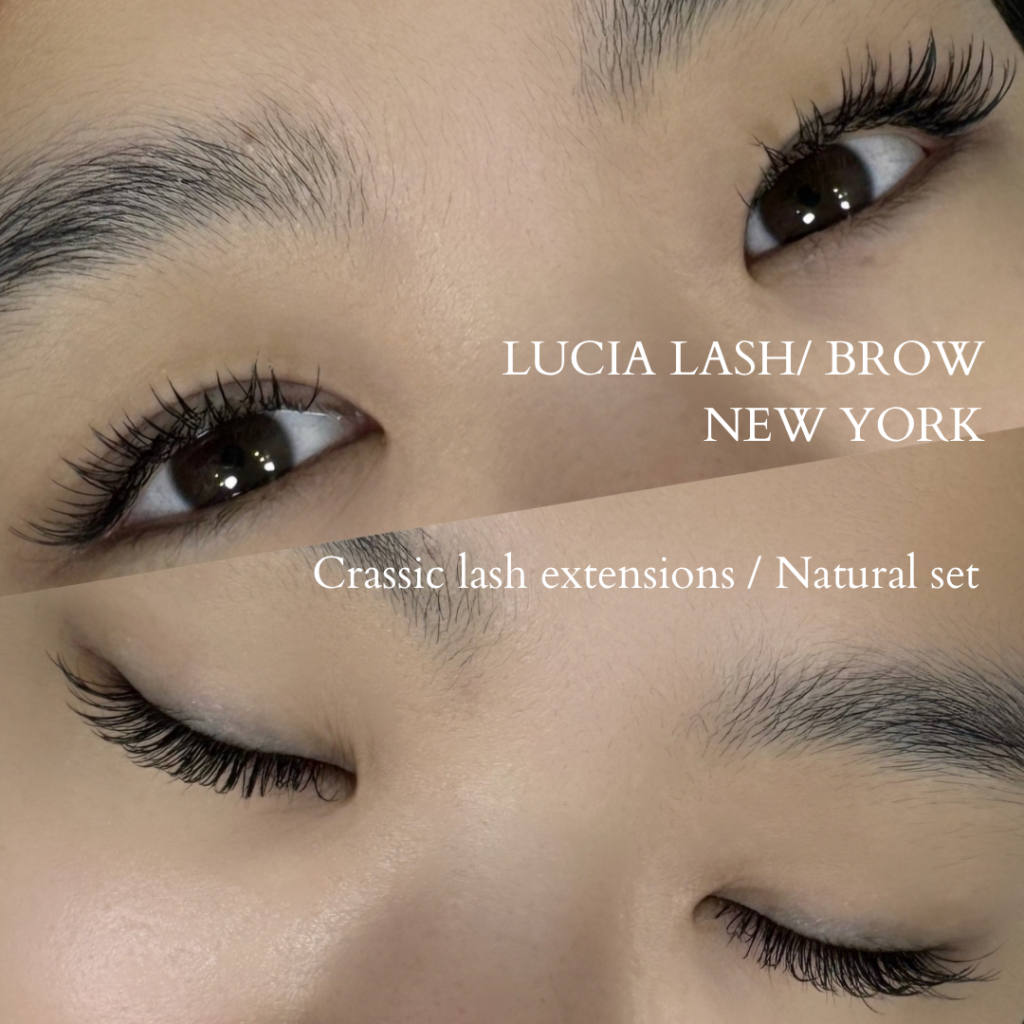
Lucia Lash/Brow New York studios document sensitivity reaction rates 35 to 45 percent higher than national averages when using traditional moisture-cured adhesives, even with low-fume formulations marketed for sensitive clients. This elevated sensitivity pattern is not subjective client complaints but objective clinical observations: prolonged tearing extending beyond the appointment, visible conjunctival redness persisting 6 to 12 hours post-service, and client-initiated early removals within 48 hours due to intolerable discomfort. These outcomes occur at rates that make traditional adhesives economically unsustainable in competitive New York markets where client retention determines business survival.
New York client schedules conflict fundamentally with traditional adhesive aftercare restrictions. The standard 24 to 48-hour prohibition on water, steam, and sweat exposure creates immediate friction with professional routines that include morning gym sessions before work, midday workout classes, evening social commitments involving dinner and drinks, and late-night face washing before bed. Clients attending lash appointments during lunch breaks cannot avoid afternoon coffee steam, evening shower, or next-morning hair washing. Professionals with early meetings the day after service cannot delay face washing until afternoon. The lifestyle incompatibility between traditional aftercare demands and actual client behavior creates retention failures that clients attribute to poor service quality rather than their own protocol violations.
LED curing eliminates this conflict entirely by allowing immediate water exposure, same-day exercise and showering, and normal evening routines without modification. Lucia Lash/Brow New York locations adopted LED systems as default technology specifically because the zero-downtime characteristic aligned with client realities rather than requiring behavior modifications clients could not or would not maintain.
Contact lens wear rates in New York professional populations exceed national averages due to lifestyle factors: eyeglasses interfere with virtual reality work equipment, obstruct peripheral vision during urban navigation, fog during weather transitions, and conflict with fashion and professional appearance preferences in image-conscious industries.
Contact lens wearers experience traditional adhesive sensitivity at rates 40 to 50 percent higher than non-wearers because lenses trap formaldehyde vapors between the lens and corneal surface, prolonging chemical exposure. Even clients who experience minimal irritation during application develop delayed reactions 4 to 8 hours later when vapors trapped under lenses concentrate as the adhesive continues off-gassing.
Contact lens wearers experience traditional adhesive sensitivity at rates 40 to 50 percent higher than non-wearers because lenses trap formaldehyde vapors between the lens and corneal surface, prolonging chemical exposure. Even clients who experience minimal irritation during application develop delayed reactions 4 to 8 hours later when vapors trapped under lenses concentrate as the adhesive continues off-gassing.
This pattern creates specific consultation challenges. Clients report no discomfort during traditional extension application, leave the salon satisfied, then contact the studio 6 hours later reporting severe burning and redness. The delayed onset makes it difficult to connect symptoms to adhesive chemistry rather than unrelated eye irritation. LED curing prevents this scenario entirely by completing polymerization before clients leave, eliminating the delayed vapor release that causes contact lens wearer complications.
New York clients routinely research lash extension chemistry before booking appointments, arriving at consultations with specific questions about cyanoacrylate polymerization, formaldehyde release rates, and photoinitiator safety profiles. This behavior reflects broader wellness trends in urban professional populations who approach beauty services with the same analytical scrutiny they apply to medical procedures or nutrition decisions. When informed clients learn that LED curing eliminates formaldehyde off-gassing while traditional adhesives release irritant vapors for 24 to 48 hours, the choice becomes obvious regardless of price premium.
Salons offering only traditional adhesives lose bookings to competitors providing LED options, not because of dramatic performance differences but because educated clients prefer avoiding unnecessary chemical exposure when alternatives exist.
Salons offering only traditional adhesives lose bookings to competitors providing LED options, not because of dramatic performance differences but because educated clients prefer avoiding unnecessary chemical exposure when alternatives exist.
This client-driven demand accelerated LED adoption in New York 18 to 24 months ahead of national patterns. Markets observing New York's transition can anticipate similar shifts as health literacy increases and clients begin requesting specific adhesive technologies rather than accepting whatever system their salon uses.
Dense salon concentration in New York creates competitive dynamics where technological differentiation becomes survival necessity. When multiple studios within a three-block radius offer lash extensions, salons distinguish themselves through specialized capabilities rather than competing solely on price or convenience. Once several high-profile New York studios adopted LED curing and promoted the sensitivity-reduction benefits, nearby salons experienced client questions during consultations: do you offer LED extensions, why don't you use the new light-curing system, can you match the LED service my friend gets at Studio X. Salons without LED capability lost bookings to competitors who could answer these questions affirmatively.
This competitive cascade forced widespread LED adoption across New York's lash market not because every salon independently concluded the technology was superior but because client expectations shifted rapidly once awareness reached critical mass. Lucia Lash/Brow New York studios equipped all locations with medical-grade LED curing systems and trained all technicians in photoinitiation protocols to maintain competitive positioning as client demand evolved.
New York's transition to LED-dominant lash extension services demonstrates a pattern likely to repeat in other major metropolitan markets as environmental stress factors, professional lifestyle demands, and health literacy increase nationwide. The city serves as early indicator because the conditions driving LED adoption exist in concentrated form, but those same factors are expanding geographically. Pollution and air quality concerns are rising in secondary metros. Professional work schedules demanding flexibility are becoming standard across knowledge-economy sectors. Contact lens wear is increasing as virtual reality and augmented reality technologies proliferate. Client research and ingredient awareness are spreading through social media and wellness content beyond urban cores.
Markets currently viewing LED as premium specialty option should anticipate that within 24 to 36 months, clients will begin requesting it as baseline expectation. The New York experience shows that once LED awareness reaches approximately 30 percent of the client base, competitive pressure forces system-wide adoption regardless of individual salon preferences. Proactive adoption positions salons ahead of this demand curve rather than reacting after clients have already shifted loyalty to early-adopter competitors.
The Retention Reality: Do LED Extensions Last As Long As Traditional?
Extension retention depends on bond strength between natural lash and extension base, but also on natural lash growth cycle timing, daily habits, and aftercare compliance. LED and traditional adhesives create bonds with different properties that affect retention in ways clients should understand before choosing between methods.
Traditional moisture-cured cyanoacrylate bonds are extremely strong in static tensile strength, meaning they resist direct pulling force effectively. The slow curing process allows polymer chains to organize densely, creating rigid bonds that hold firmly under steady tension. This strength is ideal for clients with strong natural lashes and low mechanical stress lifestyles.
LED photo-cured bonds have slightly lower static tensile strength but superior flexibility and impact resistance. The rapid curing creates less organized polymer structures with retained molecular movement capacity. These bonds absorb mechanical shock better, meaning they withstand the repeated micro-impacts from sleeping on pillows, rubbing eyes, or towel drying face. For clients with active lifestyles, this flexibility can actually improve practical retention despite lower absolute bond strength.
Retention comparison by client profile:
Clients with oily skin and lashes: LED adhesives retain marginally better because the rapid curing leaves less uncured adhesive on lash surface that skin oils can break down. Traditional adhesives continue curing for 48 hours, remaining vulnerable to oil interference longer. Difference is typically 2 to 4 additional days of retention.
Clients who sleep face-down: LED flexibility advantage becomes significant. Traditional rigid bonds are more likely to pop off from repeated pillow pressure. LED extensions may last 7 to 10 days longer in face-sleepers.
Clients with rapid lash growth: No difference. When natural lashes grow out quickly, both bond types release at same rate determined by biology rather than adhesive failure. High-growth clients need fills every 2 weeks regardless of adhesive type.
Clients with slow lash growth and careful habits: Traditional adhesives may retain slightly longer, 3 to 5 days, due to superior static bond strength. These clients benefit less from LED's mechanical advantages and may prefer traditional extensions if sensitivity is not a concern.
Average retention expectations:
Traditional adhesives: 3 to 4 weeks until 40 to 50% of extensions have released, requiring fill appointment.
LED adhesives: 3 to 4 weeks until 40 to 50% of extensions have released, with slightly higher retention of remaining extensions through week 5.
The retention difference is minimal in most cases. Clients should choose LED primarily for sensitivity benefits and immediate water exposure capability, not retention improvement. Salons claiming LED extensions last significantly longer than traditional are overstating benefits or comparing LED to poorly applied traditional extensions.
What Water Exposure Rules Apply To LED vs Traditional Extensions?
The dramatic difference in water exposure rules between LED and traditional extensions provides lifestyle convenience that many clients value more than the sensitivity benefits. Understanding the science behind these rules helps clients comply appropriately rather than testing boundaries that could compromise results.
Traditional extension water exposure rules:
No water contact for 24 hours minimum, 48 hours preferred. This allows curing to reach 90% completion before moisture exposure that could disrupt polymer formation.
No steam exposure (sauna, hot shower directly on face) for 48 hours. Steam provides concentrated moisture and heat that accelerates curing but can also create uneven polymerization patterns causing weak bond spots.
No swimming pool or ocean exposure for 72 hours. Chlorine and salt create osmotic pressure that can pull moisture from incomplete bonds, weakening them. The chemicals also interact with uncured adhesive causing degradation.
These rules are not technician preference but chemistry requirements. Traditional adhesives exposed to water before adequate curing time show measurably reduced bond strength and retention failure within 1 to 2 weeks rather than normal 3 to 4 weeks.
LED extension water exposure rules:
Water contact permitted immediately after service. The bond reaches 85 to 95% strength within 60 seconds of light curing, sufficient to withstand normal water exposure from face washing or showering.
Steam exposure permitted after 2 hours. Brief waiting allows residual heat from light exposure to dissipate and gives bonds time to reach final room-temperature strength. Immediate steam exposure while lashes are still warm from LED may create slight bond softening.
Swimming permitted after 4 hours. The extended waiting period accounts for extended water immersion duration. While bonds are water-resistant immediately, prolonged submersion creates more stress than brief washing. The 4-hour buffer ensures absolute bond stability.
The practical lifestyle impact is significant for clients with morning service appointments. Traditional extensions require planning evening or weekend appointments to accommodate water avoidance during the workday following service. LED extensions allow lunch-break appointments with immediate return to work, evening workouts including showering, and normal evening routine without restriction.
How Does Japanese LED Technique Differ From Standard Application?
Japanese precision protocols for LED extension application include systematic steps that maximize bond quality and prevent the common failures that occur when technicians switch from traditional to LED methods without proper retraining. The chemistry differences require technique adaptations that are not intuitive to technicians experienced only with traditional adhesives.
Pre-application lash preparation is more critical: LED adhesives are less forgiving of oils or residue on natural lashes. Traditional adhesives have longer working time allowing them to displace minor contamination. LED adhesives set so rapidly that any barrier prevents proper adhesion. Japanese protocols mandate two-step cleansing: primer solution to remove oils followed by protein remover to eliminate subtle residue invisible to inspection. This preparation takes additional 2 to 3 minutes but prevents bond failures that require correction.
Adhesive application quantity must be precise: LED formulas work best in thin, even layers. Excess adhesive does not cure completely in the center, creating weak points that fail under stress. Japanese technicians are trained to use 30 to 40% less adhesive volume than traditional methods, applying barely visible layers that cure uniformly. This precision requires practice because visual assessment is difficult with clear adhesive on dark lashes.
Light positioning follows eye anatomy mapping: Japanese LED protocols map the eye's three-dimensional contour and position the curing light to ensure consistent wavelength exposure across all extensions. Eyes are not flat surfaces, and light intensity decreases with distance and angle. Extensions at the inner corner, center, and outer corner require light repositioning to maintain uniform curing. Technicians using single static light position create uneven curing patterns that cause selective retention failures where some extensions last weeks while others fail within days.
Curing time is extension-length dependent: Shorter extensions require 15 to 20 second curing, medium length 20 to 30 seconds, long dramatic extensions 30 to 40 seconds. The increased surface area and weight of longer extensions require fuller curing to achieve adequate bond strength. Japanese timing protocols are specific and documented rather than estimated.
Post-curing inspection is mandatory: Japanese precision standards require checking 10 to 15 randomly selected extensions for complete adhesion by gently touching near the base with a micro-brush. Properly cured extensions are completely rigid at the attachment point. Any flexibility indicates incomplete curing requiring additional light exposure. This quality control step takes 30 seconds but prevents retention failures that would otherwise become apparent only after the client leaves.
These systematic approaches distinguish Japanese LED application from standard Western techniques that treat LED as simply faster traditional application. The chemistry differences demand protocol adaptations that Japanese training emphasizes but generic LED training often glosses over in favor of speed.
What Are The Cost-Benefit Tradeoffs Between LED and Traditional Extensions?
The price premium for LED extensions ranges from $50 to $150 above traditional extension pricing depending on market and salon positioning. This difference reflects higher adhesive costs, specialized equipment investment, and extended technician training requirements. Clients evaluating whether LED extensions justify the premium should understand what they are purchasing beyond marketing claims about superior technology.
Quantifiable LED benefits:
Elimination of 24 to 48 hour activity restrictions saves time and scheduling complexity. Value depends on individual lifestyle demands.
Reduced sensitivity reactions for the 40 to 60% of clients who experience discomfort with traditional adhesives. Value is high for sensitive clients, zero for clients who never experienced issues.
Slightly improved retention in specific situations (oily skin, active lifestyles) adds 3 to 7 days between fills. Value calculation: if fills cost $80 and LED extends time by one week across 8 fill cycles annually, savings approach $100 yearly, offsetting some of the per-service premium.
Traditional adhesive advantages:
Lower service cost allows more frequent maintenance for clients prioritizing perfect fullness through short fill intervals. Some clients prefer fills every 2 weeks regardless of retention, making LED retention benefits irrelevant.
Longer working time during application allows more precise extension positioning. Perfectionist clients who prioritize absolute symmetry may prefer traditional technique even if sensitivity is a minor concern.
Proven track record with decades of use across millions of clients. While LED safety data is positive, the technology has only 5 to 7 years of widespread use versus 20+ years for traditional methods. Risk-averse clients may prefer the established approach.
Client profiles where LED is recommended:
Known sensitivity to traditional adhesive fumes documented through previous reactions or positive fume exposure test.
Active lifestyles requiring same-day water exposure for sports, swimming, or demanding work schedules.
Oily skin and lashes causing below-average retention with traditional adhesives.
High-stress professionals who cannot accommodate 48-hour activity restrictions.
Client profiles where traditional remains appropriate:
No history of sensitivity and negative fume exposure test results.
Budget constraints where $50 to $100 per appointment premium is meaningful.
Preference for longest possible working time during application to achieve specific aesthetic goals.
Skepticism about newer technologies preferring established methods.
The decision should be made through consultation weighing individual priorities rather than assuming LED is universally superior. Japanese precision philosophy emphasizes appropriate technique selection based on client-specific variables rather than promoting single approaches as ideal for everyone.